

Solo ad fraud is defined as the deliberate delivery of fake, recycled, or bot-generated clicks sold as legitimate email traffic to affiliate marketers and small business owners. Knowing how to avoid solo ad scams starts with recognizing that most fraud is preventable through seller vetting, small test orders, and independent traffic tracking. The core problem is not solo ads as a channel. The problem is unverified vendors who exploit buyers who skip due diligence. This guide gives you a practical, step-by-step system to protect your ad spend and get real results.
What are the common solo ad scams and how to recognize them?
Solo ad scams follow predictable patterns. Once you know what to look for, most fraudulent offers become obvious before you spend a dollar.
The most common scam types include:
- Prices below $0.30 per Tier-1 click. Real Tier-1 traffic costs more because it requires list maintenance and audience quality control. Prices significantly below $0.30 per click signal bot traffic or low-quality international lists. That threshold exists because legitimate vendors cannot profitably deliver quality traffic below it.
- Guaranteed sales or opt-in promises. No legitimate vendor guarantees sales. A vendor controls traffic delivery. They do not control your funnel, your offer, or your follow-up sequence. Any guarantee of sales is a red flag, not a selling point.
- Fake or recycled leads. Some vendors sell the same list repeatedly to multiple buyers. The subscribers have seen dozens of affiliate offers and stopped engaging. You get clicks, but the list is burned out.
- Vague seller profiles and unverifiable testimonials. Scam vendors often post generic five-star reviews with no photos, no specifics, and no verifiable buyer names. Real testimonials include delivery speed, opt-in rates, and niche details.
- Pressure tactics and evasive answers. Vendors who pressure for immediate purchase or dodge questions about list composition are signaling they have something to hide.
Pro Tip: Search the vendor's name alongside words like "scam" or "review" on Google before buying. Real buyer feedback includes specific details about delivery speed, communication, and lead quality.
How to vet solo ad sellers before buying traffic
Vetting a seller takes 20 minutes and can save you hundreds of dollars. The goal is to verify that the vendor's list matches your niche, their traffic is real, and their communication is transparent.
- Ask for recent client tracking screenshots. Request screenshots from the last 30 days, with buyer names redacted. Look for consistent click delivery spread over 24–48 hours, not a sudden spike in the first hour.
- Search for independent reviews. Search vendor names with keywords like "review" and "scam" to find genuine buyer feedback. Look specifically for complaints about fake clicks, poor opt-in rates, or unresponsive communication.
- Request a funnel review and niche discussion. A reputable vendor will ask about your offer, your squeeze page, and your lead magnet before agreeing to run your campaign. Vendors who refuse funnel reviews or skip niche relevance questions often sell generic, low-quality traffic.
- Verify testimonial authenticity. Look for diversity in testimonials: different niches, different order sizes, real profile photos, and specific results like opt-in rates or cost per lead figures. Generic praise with no details is a warning sign.
- Insist on tracking link transparency. Reputable vendors use tracking links under the buyer's control and show parity between their reported click count and your independent tracking data. Any vendor who refuses to use your tracking link or relies only on their internal dashboard should be avoided.
A pre-run conversation is your best filter. It reveals whether the vendor understands your niche, respects your process, and operates with transparency. Sellers who skip this step are not worth your money.
How to test and track solo ad traffic to detect fraud

Testing before scaling is the single most effective way to prevent solo ad fraud. A small test order reveals far more about a vendor than any testimonial.
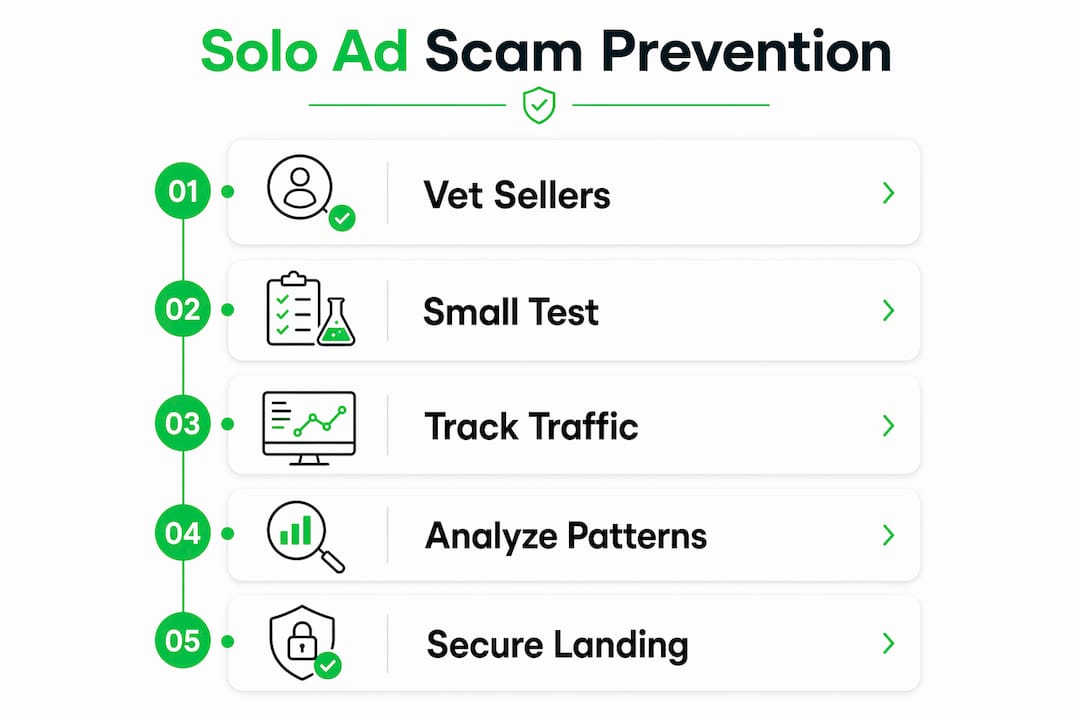
Start with a small test order
Small test orders of 100–200 clicks reveal traffic quality before you commit to larger budgets. A $50 test order tells you more about a vendor than a $500 order placed on blind trust. Run the test to a clean squeeze page with a single opt-in form and no distractions.
Use independent tracking software
Never rely solely on the vendor's click counter. Tools like ClickMagick or Voluum let you track geo location, device type, IP address, and click timing independently. Tracking traffic independently and checking geographic splits can expose fake clicks and bot traffic that vendor dashboards hide.
Analyze delivery speed and patterns
Reputable vendors spread clicks over 24–48 hours. A delivery of 200 clicks in 15 minutes is a bot traffic signal. Review your tracking data for impossible geographic splits, such as 90% of clicks from a single country that does not match your target market.
Compare cost per click vs. cost per lead
| Metric | What it measures | Why it matters |
|---|---|---|
| Cost per click (CPC) | Price paid per visitor | Lower CPC does not mean better value |
| Cost per lead (CPL) | Price paid per opt-in | The real measure of traffic quality |
| Opt-in rate | Percentage of clicks that convert | Healthy range is 35%–45% for Tier-1 traffic |
Many buyers focus on CPC instead of CPL and miss the real quality signal. A vendor charging $0.50 per click who delivers a 40% opt-in rate is a better investment than one charging $0.25 per click with a 5% opt-in rate.
Harden your landing page against bots
Double opt-ins and landing page friction filter out bots and raise engagement quality. A double opt-in requires subscribers to confirm their email address, which bots cannot do. This reduces your raw opt-in count but dramatically improves list quality and long-term deliverability.
Pro Tip: Use IP dispersion analysis and time-series click plots in your tracking tool to spot fraud patterns. A legitimate traffic run shows varied IP addresses, mixed device types, and clicks spread across multiple hours.
Best practices to protect your budget and maximize ROI
Safe solo ad buying is a repeatable process, not a one-time checklist. These practices reduce fraud risk on every campaign you run.
- Verify traffic tier and set realistic expectations. Tier-1 traffic from the US, UK, Canada, and Australia delivers the highest opt-in rates. Expect 35%–45% opt-in rates from quality Tier-1 vendors. Anything below 20% on a well-built squeeze page signals a traffic quality problem.
- Reject any vendor promising guaranteed sales. Guaranteed sales claims exploit beginners who do not yet understand that conversions depend on the funnel, the offer, and the follow-up sequence. Traffic quality affects conversions, but no vendor controls your sales rate.
- Maintain clear, ongoing communication. Message your vendor before, during, and after the campaign. Ask for delivery updates and click reports. A vendor who goes silent after payment is a warning sign.
- Optimize your funnel and email follow-up sequence. Even clean traffic will not convert on a weak funnel. Test your squeeze page headline, lead magnet, and thank-you page before running paid traffic. Your cost per lead optimization depends as much on your funnel as on the traffic source.
- Use layered anomaly detection throughout the campaign. Check your tracking data at the 25%, 50%, and 100% delivery marks. Look for sudden spikes, geographic anomalies, and engagement drop-offs. Catching a problem at 50% delivery lets you pause and dispute before losing your full budget.
Key takeaways
Avoiding solo ad scams requires vetting sellers before buying, testing with small orders, and tracking traffic independently on every campaign.
| Point | Details |
|---|---|
| Vet sellers before spending | Ask for tracking screenshots, funnel discussions, and independent reviews before any purchase. |
| Test with 100–200 clicks first | Small test orders reveal traffic quality and vendor honesty before you scale. |
| Track independently, always | Use tools like ClickMagick or Voluum to verify click counts, geo splits, and delivery patterns. |
| Judge CPL, not CPC | Cost per lead is the real measure of traffic value; low CPC with poor opt-ins wastes your budget. |
| Reject guaranteed sales claims | No vendor controls your sales rate; any guarantee of sales is a scam signal. |
What I've learned from getting burned by solo ad vendors
The first time I lost money on solo ads, the vendor had glowing testimonials, a professional website, and prices that seemed like a deal. The traffic arrived in under two hours, all from the same three countries, and my opt-in rate was 3%. That experience taught me something no guide told me clearly: judge the seller before you judge the traffic.
Most affiliate marketers focus on the wrong thing. They compare prices, read the vendor's own testimonials, and make decisions based on what the vendor says about themselves. The better approach is to treat every new vendor like a job interview. Ask hard questions. Request proof. Watch how they respond to scrutiny. A legitimate vendor welcomes due diligence. A scammer deflects it.
The second lesson I learned is that small test orders are not optional. They are the only way to verify what a vendor promises. I now run every new vendor through a 100-click test before committing to anything larger. The test costs $40–$60 and saves me from $300–$500 mistakes. That math is obvious in hindsight, but most beginners skip it because they are eager to scale fast.
The third lesson is about metrics. I used to celebrate low cost per click. Now I only care about cost per lead and list engagement after 30 days. Cheap clicks that do not open emails are not traffic. They are noise. The solo ads guide for affiliate marketers that actually works is built on CPL, not CPC.
— Phil
Vetted solo ad providers worth considering in 2026
Finding trustworthy vendors is the hardest part of solo ad buying, especially for marketers who are new to the channel.
Soloadsguide maintains a regularly updated list of vetted solo ad providers ranked and reviewed for 2026. Each provider on the list has been evaluated for Tier-1 traffic quality, tracking transparency, and real buyer feedback. Users of Soloadsguide have reported results including a 40% reduction in cost per lead after switching from unverified vendors to providers on the vetted list. Start with a test order from any provider on the list, track your results independently, and scale only after your CPL confirms the traffic quality.
FAQ
What is a solo ad scam?
A solo ad scam is when a vendor delivers fake, bot-generated, or recycled email clicks instead of genuine subscriber traffic. The buyer pays for clicks that will never convert into real leads or sales.
How do I recognize solo ad scam warning signs?
Key warning signs include prices below $0.30 per Tier-1 click, guaranteed sales promises, pressure to buy immediately, and refusal to share independent tracking data.
Is solo advertising safe for beginners?
Solo advertising is safe when you vet vendors thoroughly, start with small test orders of 100–200 clicks, and track traffic independently with tools like ClickMagick or Voluum.
What opt-in rate should I expect from legitimate solo ads?
Legitimate Tier-1 solo ad traffic delivers opt-in rates of 35%–45% on a well-built squeeze page. Rates below 20% on clean traffic indicate a vendor or list quality problem.
How do I find reputable solo ad sellers?
Search vendor names with terms like "review" and "scam" to find independent buyer feedback. Request tracking screenshots, ask about list composition, and insist on using your own tracking link before placing any order.
Recommended
- Solo Ads Blog, Tips, Guides & Reviews | SoloAdsGuide.com
- The Solo Ads Guide for Affiliate Marketers
- How to Vet Solo Ad Sellers (Before You Spend a Dollar)
- The Ultimate Guide to Solo Ads (2026) | SoloAdsGuide.com
Want Verified Traffic Without the Guesswork?
PulseTraffic screens every seller, filters bot clicks in real time, and shows you verified buyer traffic labels before you spend a dollar.