
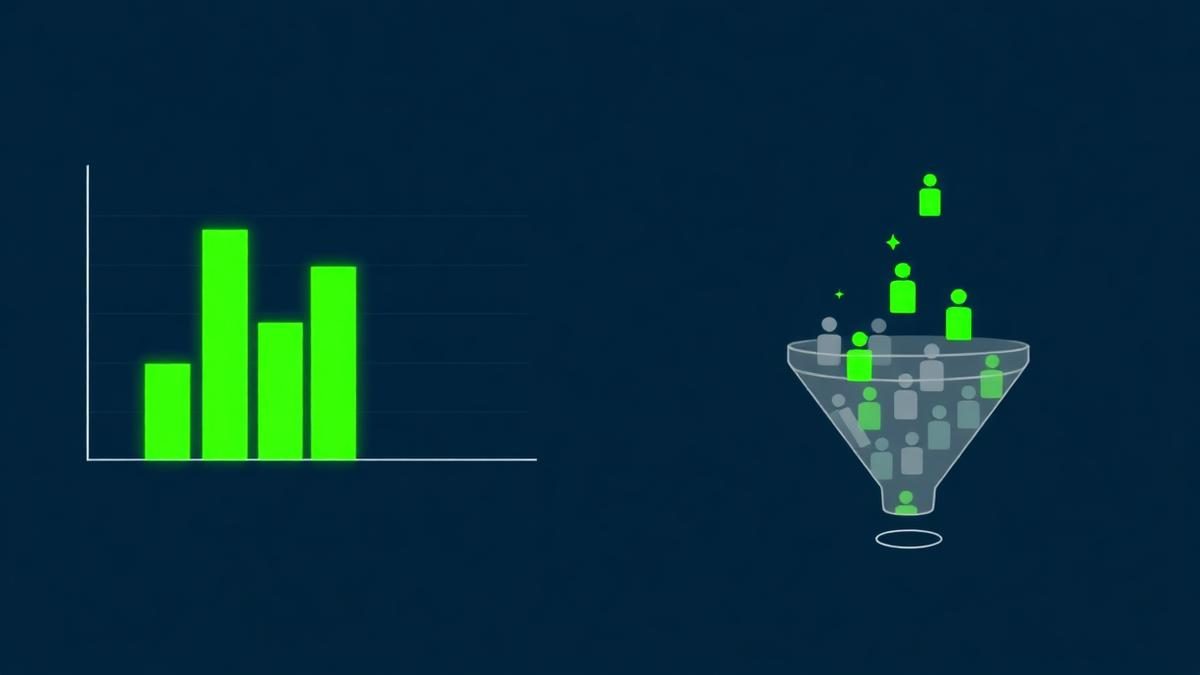
You spent $500 on a solo ad campaign.
Got 1,000 clicks.
Landed three opt-ins.
Zero buyers.
I have been on both sides of this conversation for over a decade — as a seller running lists and as a buyer trying to make cold traffic pay. So let me say what nobody in this industry wants to say out loud: you did not fail at marketing. You bought the wrong thing. For the last ten years, solo ads have been sold on one metric — click volume. How many clicks for $500. How fast can you scale. How cheap can you buy them. That is the wrong question in 2026.
The right question is: what signals am I actually buying? Everything below — tracking, vetting, testing — is about answering that one question.
The Click Myth — Why CTR Is Not Your Real Problem
Rewind to 2012–2015, before iOS privacy updates and serious bot detection. Back then, clicks were a decent proxy for intent. If someone clicked your email link, they probably wanted the offer. Not perfect, but decent.
Then the market changed. Email list quality tanked. Bot traffic got cheap. Fraud got easier to hide. But vendors kept selling the same metric: clicks. Because clicks are easy to prove. A vendor sends 1,000 clicks, Google Analytics agrees, argument over. Perfect cover for fraud. You only find out two weeks later, when the conversion column reads zero.
You are optimizing the wrong thing
When you obsess over click-through rate, you are optimizing for something vendors can game — misleading subject lines, curiosity gaps, urgency hacks, anything that triggers a finger tap. But triggering a click is not the same as creating a buyer. A 15% CTR on garbage traffic is worse than a 2% CTR on real, intent-driven traffic.
You already know this. You keep measuring CTR because it is what you can see. It feels like progress. It is not. You are measuring what is easy, not what matters.
In 2026, here is what actually matters — the signals that tell you whether traffic is buyer-ready:
- Is this person opening email from multiple senders (their inbox is warm, they are real)?
- Are they engaging with other promotions (intent-driven, not dormant)?
- Are they in your target geography (Tier 1, or wherever your offer converts)?
- Do the engagement patterns look human (not the same-second click storms bots produce)?
- Are they subscribing to similar offers (proven buyer behavior)?
Vendors who can answer these get $0.30+ a click. Because they are not selling clicks — they are selling filtered, verified traffic. Vendors still selling pure clicks charge $0.01–$0.05, and you wonder why the traffic is dead. You get what you pay for, because you are paying for the wrong thing.
The algorithm shift nobody talks about
Around 2023–2024, Google, Meta, and the major email providers all moved to behavioral signal detection. They now track:
- How fast someone engages with email (opens within two hours vs two days)
- Whether they click multiple links in a sequence (real interest vs accident)
- Time on page (two seconds is a bot, thirty-plus is a human)
- Whether they ever purchase (buying signal = platform priority)
That creates a flywheel. Good traffic → real engagement → better inbox placement → vendor reputation improves → more good traffic. Bad traffic → dead opens → bounces and complaints → vendor gets flagged → forced into cheaper, worse lists. If you are getting flagged as a spammer, it is usually not you. It is the source you bought. But you are the one holding the bag.
This is exactly why I built PulseTraffic. Every seller on the platform is manually vetted, every click is bot-filtered in real time, and you can see verified buyer-traffic labels before you spend a dollar. It does not remove the need to run your own numbers — nothing does — but it takes the "is this vendor even legit" question off the table.
The Funnel Audit — Your Landing Page Might Be the Real Culprit
Before you blame the traffic, audit your funnel. I am serious. Sixty percent of the time, low conversion is funnel friction, not traffic quality. I have watched buyers burn thousands chasing new vendors when their landing page was the actual problem.
Mobile experience
Does your page load in under two seconds on mobile? Test it. Right now. On 4G. If it does not, you are losing 70% of your mobile traffic before they read a word. Solo ad traffic is 60–70% mobile. Slow equals dead. Fix: static HTML landing page (not WordPress with fifteen plugins), test on GTmetrix, aim for under 1.5 seconds.
The hook (first 5 seconds)
Can a stranger understand your offer in five seconds? Not the benefits — the offer. If they need three sentences to figure out what you are selling, they are gone. Solo ad readers are skimmers. They have been pitched ten times today. You get five seconds.
Red flags: clever headline that hides the offer, weird fonts or spammy colors, too many options above the fold, generic stock photos. Fix: boring, clear headline. Lead with the offer, not the benefit. One CTA above the fold.
- Bad: "The Secret Millionaires Do Not Want You to Know"
- Good: "Get the Email List Building Checklist (Free)"
Boring wins.
Form friction
More than two fields (email + first name) and you are bleeding conversions. Solo ad traffic is cold. They are not writing you their life story. Lead magnet = email only. Mid-funnel = one or two extra fields. Sales page can be longer. Anything more upfront is friction.
Value prop clarity
Does the page deliver what the email promised? If the subject said "Free list building course" and the page says "Join my $997 coaching program," they bounce. Match the promise. State the benefit. Show proof.
CTA button
Obvious does not mean big — obvious means contrasting color, clear action text ("Get Access", "Send Me the Checklist", not "Learn More"), placed right after the benefit statement. And one CTA. Pick it, commit to it.
Mobile conversion tracking
A lot of page builders drop mobile tracking silently. You think the traffic is bad — actually your tracking is broken. Test the conversion path on mobile, verify pixels fire, check form submissions land, confirm the thank-you page loads.
The funnel audit checklist
Before you buy more traffic, score yourself:
- Page loads in under 2 seconds on mobile
- Offer is clear in the first 5 seconds
- Opt-in form is 2 fields or fewer
- Email promise matches the page
- CTA button is obvious and singular
- Mobile tracking is verified working
- You are not asking for too much upfront
- Design does not look sketchy
Under 6/8? Fix the funnel first. Do not buy another click until you do.
The Signal Strategy — How to Know Which Vendors Actually Work
Funnel is solid. Traffic still is not converting. Now we are actually diagnosing traffic quality.
This is where most buyers get lost. They open Google Analytics, see 1,000 clicks and 10 conversions, decide the vendor is bad, spend another $500 on a "better" one, get 800 clicks and 8 conversions, and repeat. They are measuring the wrong thing.
You need to track signals, not just clicks.
Pixels and CAPI: the minimum stack
Most solo ad buyers set up zero real tracking. They drop a landing page URL into an email and pray. Then they cannot tell you which vendor delivered.
- Conversion pixel (Meta or GA4) on your thank-you page, tagged with the traffic source. Tells you how many visited, how many converted, what the rate is.
- CAPI (Conversion API). Server-side conversion tracking. Does not rely on browser pixels, which get blocked by iOS and ad blockers. Harder to fake, more reliable. A vendor showing 1,000 pixel conversions might actually have 300 real ones. CAPI sees the truth.
- Event tracking. Micro-signals before conversion — link clicks, 30+ seconds on page, scroll depth, multiple interactions. Tells you if traffic is intent-driven or tire-kicking.
Concrete example:
- Vendor A: 1,000 clicks, 50 conversions, 8-second average session, 80% bounce, 5% repeat clicks
- Vendor B: 500 clicks, 45 conversions, 35-second session, 12% bounce, 0.5% repeat
Vendor B has 9% conversion. Vendor A has 5%. But you were paying Vendor A because they had more clicks. See the problem?
The simple setup
You do not need to be technical. Do this:
- Add a conversion pixel on your thank-you page, tagged by source.
- Use UTM parameters on every link:
?utm_source=vendor_name&utm_medium=solo&utm_campaign=offer. - Track time-on-page and scroll depth (most modern builders do it automatically). If your average session is under 10 seconds, the traffic is trash.
- If you are spending $500+ a month, invest in CAPI. It costs a few hundred to set up and pays for itself in one vendor decision.
Triple-Check Your Link Before You Send It to the Vendor
I had a seller once give me the wrong link, run traffic to it, then accuse me of sending him bad clicks. Let me save you from that nightmare.
The link you hand to the vendor is the single source of truth. If it is wrong, every metric you collect is garbage. If it goes to a dead page, the vendor gets a 0% opt-in and blames you. If it goes to the wrong offer, you blame the vendor. Both of you waste money.
Before you send a vendor anything, do this:
- Copy the link out of your email or chat.
- Open it in an incognito browser window.
- Confirm it lands on the exact page you want traffic hitting.
- Confirm the UTM parameters are intact.
- Submit the form or click the CTA yourself and confirm it fires.
- Send the link to a second browser or your phone and click it again.
If anything looks off, fix it before you spend a dollar.
This is not paranoia. I have had vendors paste links wrong, buyers send me old URLs, and campaigns blow up because one character was missing. Double-check. Triple-check. The two minutes it takes is cheaper than a $500 test with a broken link.
If you use PulseTraffic, most of this is already wired in — every order ships with a click-level tracking log so you can see raw geography, device, session duration, and bot filtering by seller. You still run your own pixel for conversions, but the "was this vendor honest about what they sent" question is answered before you even open Analytics.
Reading the data
Good signals: 20+ second sessions, bounce under 40%, 2–10% conversion, multiple engagement events, geo matches vendor claim, 60–70% mobile.
Bad signals: 3–5 second sessions, bounce over 70%, conversion under 0.5%, straight-shot conversions with no scroll or click events, geo says US but IPs are elsewhere, weird device mix (20% mobile is bots).
Red flags: conversion rate spikes then collapses (vendor switched to cheaper source), quality decays over the month (list is stale), same visitors converting multiple times in 24 hours (fake entries), no geo or device data available at all (vendor is hiding).
Track long enough and the pattern is obvious. Some sellers are consistent. Others got sloppy 30 days in and hoped you would not notice.
Attribution reality
You will never have perfect attribution. Someone clicks your email, does not convert, then converts three weeks later on a different source. Who gets credit? Depends on your funnel.
What you can get is directional attribution. Tag every source. Track first-click and last-click. Look for patterns across vendors. Trust consistency. If Vendor A shows better signals month after month than Vendor B, keep buying from A. Stop chasing perfect. Be directional.
Vet the Source — 3 Questions That Expose Bad Vendors
Funnel fixed. Tracking wired. Now vet the vendor before you hand them money. Real sellers will answer these. Fraudsters will dodge.
1. "Can you show me your ESP dashboard?"
Fraudsters say: "I send from my personal list," "I manage delivery myself," "It is proprietary." Translation: they are not using a real Email Service Provider.
Real vendors use AWeber, GetResponse, ConvertKit, Klaviyo, or similar — because a real list needs bounce monitoring, engagement tracking, unsubscribe management, and spam compliance. If they cannot show you their ESP, they are probably reselling scraped lists, running a bot, or blasting from a Gmail alias.
Ask for a screenshot of their list segment — subscriber counts, engagement stats, bounce rates. Every real ESP has a list health view. A legitimate vendor will show it without hesitation.
2. "Connect me with your last three buyers."
Fraudsters say: "I cannot share client info," "My buyers are private," "I do not have recent testimonials." Translation: they either do not have real buyers, or their buyers had bad results.
Real vendors have clients who got results and are willing to say so. If they can connect you with even one buyer from the last 60 days, that is a green flag. If they cannot, that is the answer.
Ask those buyers: What was your conversion rate? Was the traffic quality what the vendor claimed? Would you buy again? You will get the truth in five minutes.
This is one of the reasons every seller on PulseTraffic has public buyer feedback attached to their profile. You do not have to hunt for social proof — it is on the seller card before you check out.
3. "What is your average opt-in rate when buyers use your traffic?"
Fraudsters say: "It depends on the offer," "2–5% is normal," "Some buyers get 10%+." Translation: they do not track this, or the numbers are too low to say out loud.
A real vendor knows their opt-in ranges by offer type: "For lead magnets, buyers typically see 3–8%. For paid offers, 1–3%." If they say "I do not track it," they are either running a small operation with no data, selling junk they are afraid to quantify, or just cashing checks and not paying attention.
Bonus red flags
Pressure-test them:
- "Can I start with 50 clicks instead of 500?" Real vendors say yes because they are confident. Fraudsters say no because they need volume to hide bad results.
- "What is your refund policy if you underdeliver?" Real vendors have a clear policy (10–30 days). Fraudsters shrug.
- "Can I use my own tracking URL?" Real vendors say yes. Fraudsters insist on their system because they want to filter what you see.
- "What percent of your traffic is Tier 1 countries?" Real vendors quote a number with proof. Fraudsters give you "most of my traffic is high quality."
If any answer feels vague, that is your answer.
The Challenger Framework — Test Without Blowing Your Budget
You vetted a vendor. You want to test them. You do not want to spend $2,000 and find out they are garbage.
Most people do one of two dumb things. Either they go all-in ($2,000 up front, hope for the best, get disappointed) or they test too small ($200, 40 clicks, 1 conversion, quit — the sample was too tiny to mean anything).
Here is the framework that actually works. Three phases: Control, Challenger, Scale. The key rule most people break: rotate offers, not vendors. Same offer across every vendor and you cannot tell if a drop-off is vendor quality or offer fatigue.
Phase 1: Establish your control
Spend $300–500 with your best current vendor. Track clicks, conversions, conversion rate, average session time, geo breakdown, device breakdown. That is your benchmark.
Control:
- 800 clicks
- 48 conversions
- 6.0% conversion rate
- 25s avg session
- 70% US / 20% UK / 10% CA
- 65% mobile / 35% desktop
Phase 2: Test the challenger
Same spend, new vendor, different offer.
Challenger:
- 750 clicks
- 52 conversions
- 6.9% conversion rate
- 28s avg session
- 65% US / 25% UK / 10% CA
- 60% mobile / 40% desktop
If the challenger beats control by more than 20%, you have a winner. If it is within 20%, run it again — one test is luck, two is a pattern.
Phase 3: Scale the winner
Do not do this: $500 → $2,000 → $5,000. Quality almost always degrades as volume scales, because vendors have maybe 1,000 truly good subscribers before the list gets thin.
Do this instead:
Week 1: $500
Week 2: $750
Week 3: $1,200
Week 4: $1,800
Gradual ramp shows you the ceiling. If conversion holds above 6% through $1,800, this vendor can handle $3,000+ months. If it drops to 3% by $1,200, you found the limit.
Rules for every test
- One variable at a time. New vendor = new offer. Same vendor = same offer.
- Enough data. Minimum 500 clicks, minimum 20 conversions. Less is a coin flip.
- Same metrics for every test. Fair comparison only works with identical measurement.
- Full test before you judge. 100 clicks in is not a decision — it is a mood.
- Document everything. Spreadsheet with vendor, offer, spend, clicks, conversions, rates. Review monthly. It becomes your vendor scorecard.
The Real Problem (And Why It Matters)
The summary:
- You have been buying clicks instead of signals.
- Your funnel might be the problem — fix it first.
- Real traffic quality requires proper tracking and CAPI-level data.
- Vetting means asking uncomfortable questions and expecting real answers.
- Testing requires rigor. Rotate offers, not vendors. Ramp slowly.
The sellers who survive in 2026 are not selling clicks. They are selling data. They measure buyer signals, not CTR. They scale quality, not volume. When you buy from them, your campaigns work.
That is the entire reason PulseTraffic exists — a marketplace where every seller is vetted, every click is filtered for bots, and you can see verified buyer-traffic signals on the seller card before you check out. Same rules I have outlined here, enforced on the platform instead of left to you to police alone.
Fix the funnel. Wire the tracking. Vet the source. Test the challenger. Scale the winner. That is the playbook.
Want Verified Traffic Without the Guesswork?
PulseTraffic screens every seller, filters bot clicks in real time, and shows you verified buyer traffic labels before you spend a dollar.