
A landing page is defined as a standalone web page built for one purpose: converting a visitor into a lead or buyer. The role of landing page in solo ad campaigns is more critical than in almost any other paid traffic channel, because solo ad clicks arrive warm but impatient. The 2026 median landing page conversion rate sits between 4.02% and 6.6%, while top-performing pages clear 11.45%. That gap between median and top quartile is almost entirely explained by page design decisions, not traffic quality. Soloadsguide has tested this pattern across hundreds of campaigns, and the data is consistent: the page determines the result.
How does a landing page improve solo ad campaign effectiveness?
A landing page improves solo ad effectiveness by removing every distraction between the click and the conversion. When someone clicks a solo ad, they arrive with one expectation set by the email copy. If the page headline matches that expectation exactly, the visitor keeps reading. If it does not, they leave within seconds.
Message match between the ad copy and the landing page headline is the single highest-leverage change you can make to improve conversion rates. This is not a minor tweak. A headline that mirrors the ad's core promise can double opt-in rates on the same traffic volume. Think of it as keeping a promise: the email said "free checklist for affiliate marketers," and the page should say exactly that, not something generic like "welcome to our site."

Distractions kill conversions on paid traffic. 84% of landing pages leak traffic through navigation menus and exit links, reducing conversion rates before the visitor even reads the offer. Removing those menus is one of the fastest wins available. A focused squeeze page with no navigation, one headline, and one opt-in form consistently outperforms a full website homepage.
Page speed and mobile performance are non-negotiable for solo ad traffic. Most solo ad clicks happen on mobile devices, and every additional second of load time reduces conversions by 4% to 8%. A three-second delay costs up to 21% of conversions before the visitor reads a single word.
Key elements that drive landing page effectiveness for solo ads:
- Message match: Mirror the ad headline on the page headline, word for word when possible.
- No navigation: Remove menus, footers with links, and any clickable element that is not the CTA.
- Mobile-first design: Test on a real mobile device, not just a desktop preview.
- Fast load time: Target under three seconds. Compress images and minimize scripts.
- Single goal: One page, one offer, one action. No secondary links or sidebar content.
Pro Tip: Run your landing page URL through Google PageSpeed Insights before sending any solo ad traffic. Fix the top two recommendations first. That alone can recover 10% to 15% of lost conversions.
What are the best landing page practices for solo ad conversions?
The most effective landing pages for solo ad campaigns share a short list of structural features. Getting these right moves you from the median conversion range into the top quartile.
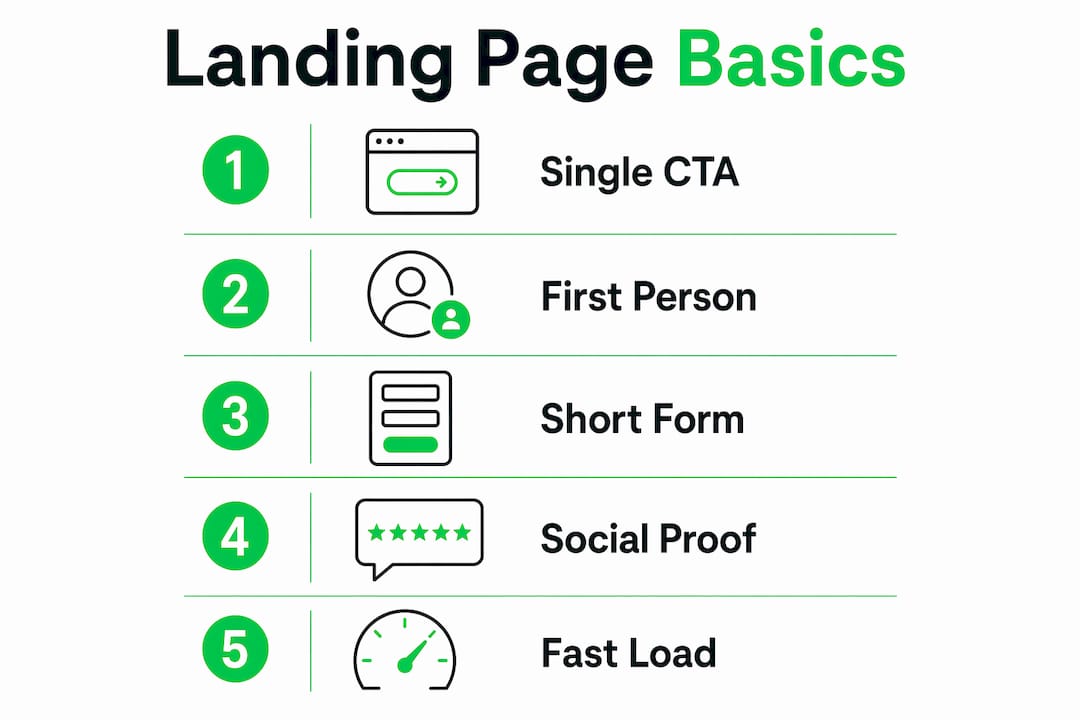
1. Use a single CTA
Single-CTA landing pages convert at an average of 13.5%, while pages with five or more CTAs drop to 10.5%. That difference compounds across thousands of clicks. Pick one action, whether that is an email opt-in, a free download, or a webinar registration, and build the entire page around it. Every other element should support that one action.
2. Write CTAs in the first person
Generic button copy like "Submit" or "Click Here" underperforms. First-person CTA copy such as "Start my free audit" or "Send me the checklist" can increase conversions by 10% to 90% compared to passive alternatives. The visitor mentally completes the action when they read it. That small psychological shift moves them to click.
3. Shorten your opt-in form
Forms with roughly three fields outperform longer forms in both completion rate and lead quality. For most solo ad campaigns, first name and email address are enough. Adding a phone number field drops completions significantly. Collect only what you need to follow up.
4. Place social proof above the fold
Specific social proof such as named testimonials with measurable results outperforms generic praise. "This checklist helped me grow my list by 300 subscribers in two weeks — Sarah M., affiliate marketer" is far more persuasive than "Great resource!" Place at least one concrete testimonial or trust signal where visitors see it without scrolling.
5. Load under three seconds on mobile
Top-performing pages load in under two to three seconds on mobile. Use a lightweight page builder, serve images in WebP format, and avoid third-party scripts that block rendering. For solo ad campaigns, where you pay per click, a slow page is money wasted before the offer is even seen.
| Element | Best practice | Impact |
|---|---|---|
| CTA count | One per page | Higher focus, fewer exits |
| Form fields | Three or fewer | Better completion rate |
| Load time | Under 3 seconds | Up to 21% fewer lost conversions |
| Social proof | Named, specific testimonials | Higher trust and opt-in rate |
| Navigation | None | Fewer exit opportunities |
Pro Tip: Test your CTA button color against the page background. High contrast between button and background consistently increases click-through on opt-in forms. Blue or orange buttons on white or gray backgrounds are a reliable starting point.
What landing page mistakes hurt solo ad campaign performance?
Most solo ad campaigns that fail do not fail because of bad traffic. They fail because the landing page breaks the chain between the click and the conversion. These are the most common and costly mistakes.
-
Mismatched messaging. The email promises a specific benefit, but the page talks about something broader or different. The visitor feels misled and leaves. This is the most common cause of high bounce rates on solo ad traffic.
-
Multiple CTAs or offers. Giving visitors two or three options creates choice paralysis. When people cannot decide quickly, they leave. One page, one offer, one button.
-
Slow load time. A page that takes four or five seconds to load on mobile loses a significant portion of visitors before they see the headline. Solo ad traffic is paid traffic. Slow pages are expensive.
-
Weak or generic social proof. Testimonials without names, photos, or specific results do not build trust. A visitor who has never heard of you needs a reason to believe the promise. Generic praise does not provide that reason.
-
Asking for too much information. A form that requests name, email, phone number, company name, and job title signals high commitment before the visitor has seen any value. Friction at the form stage is one of the most direct causes of abandoned opt-ins.
-
No clear value statement. The page headline must answer "what do I get and why does it matter to me?" in five seconds or less. If the visitor has to read three paragraphs to understand the offer, most will not bother.
Fixing even two or three of these mistakes on an existing page can move conversion rates from the 2% to 3% range into the 6% to 8% range without changing the traffic source at all.
How do you build and test landing pages for solo ad campaigns?
Building landing pages that perform well with solo ad traffic requires a structured approach. Guessing and hoping does not produce consistent results. Testing and measuring does.
-
Create one page per audience segment. One landing page per distinct intent keeps message match tight and makes test results readable. If you run solo ads to two different niches, build two pages. Mixing audiences on one page makes it impossible to know what is working.
-
Write a benefit-driven headline first. The headline is the most important element on the page. Write it before designing anything else. It should state the specific outcome the visitor gets, not a description of your product. "Get 50 new email subscribers this week" beats "Our lead generation system."
-
Set up event tracking before sending traffic. Track page views, form starts, and form completions as separate events. This tells you whether visitors are reading the page, starting the form, or abandoning it. Each metric points to a different fix. Soloadsguide recommends Google Tag Manager for this setup because it requires no developer access.
-
Run A/B tests on one variable at a time. Change the headline, or the CTA copy, or the form length. Never change three things at once. When results improve, you need to know which change caused it. Quick iterations with clean data beat slow redesigns every time.
-
Use the landing page as a diagnostic tool. Paid solo ad traffic exposes offer and positioning flaws faster than almost any other channel. If a well-structured page with matched messaging still converts below 3%, the offer itself may need work, not the design. That is valuable information. Treat every test as a learning event, not just a performance metric.
Pro Tip: Before running a full solo ad campaign, send 100 to 200 clicks to your page as a test run. Check your event tracking data. If fewer than 30% of visitors start the form, fix the page before spending more. If form starts are high but completions are low, shorten the form.
You can also grow your email list faster by pairing a tested landing page with the right solo ad vendor from the start. The combination of quality traffic and a focused page is what produces consistent opt-in rates above the median.
Key Takeaways
A landing page built for solo ad traffic must match the ad's message, remove all distractions, load fast, and focus on one conversion goal to perform above the median rate.
| Point | Details |
|---|---|
| Message match is non-negotiable | Mirror the ad headline on the page to prevent immediate bounce and lift conversions. |
| Single CTA outperforms multiple options | One clear action converts at 13.5% versus 10.5% for pages with five or more CTAs. |
| Page speed directly costs money | A three-second load delay can eliminate up to 21% of conversions on paid traffic. |
| Short forms convert better | Three fields or fewer improve completion rates without reducing lead quality. |
| Test one variable at a time | Clean A/B tests produce readable data and faster improvements than full redesigns. |
What I've learned about landing pages and solo ads after years of testing
Most marketers treat landing pages as a design project. They spend days on colors, fonts, and layout, then send traffic and wonder why conversions are low. The design matters far less than the message.
The single most important thing I have seen in solo ad campaigns is this: when the page headline uses the same words as the email that drove the click, conversion rates go up almost every time. Not sometimes. Almost every time. That consistency is rare in marketing, and it tells you something important about how people make decisions when they click a paid link.
Solo ads are particularly unforgiving when the offer is unclear. Paid traffic exposes positioning flaws within the first 200 clicks. If your page is not converting, the traffic is giving you real data about your offer, not just your design. That is actually a gift if you read it correctly.
The other thing I would push back on is complexity. Marketers add elements to landing pages thinking more information builds more trust. The opposite is true. Removing distractions consistently outperforms adding them in conversion rate tests. A plain page with a strong headline, three bullet points, and a short form beats a long-form page with videos, carousels, and multiple sections almost every time for cold solo ad traffic.
Keep separate pages for separate traffic sources. The page you use for social traffic should not be the same page you send solo ad clicks to. Solo ad visitors arrive from an email context. They are in reading mode, not browsing mode. A page that respects that context, short, direct, and promise-focused, will always outperform a generic page built for everyone.
If you want to reduce your cost per lead on solo ads, start with the landing page. It is the highest-leverage point in the entire campaign.
— Phil
How Soloadsguide supports your solo ad and landing page strategy
Knowing what a great landing page looks like is one thing. Finding the right traffic to send to it is another.
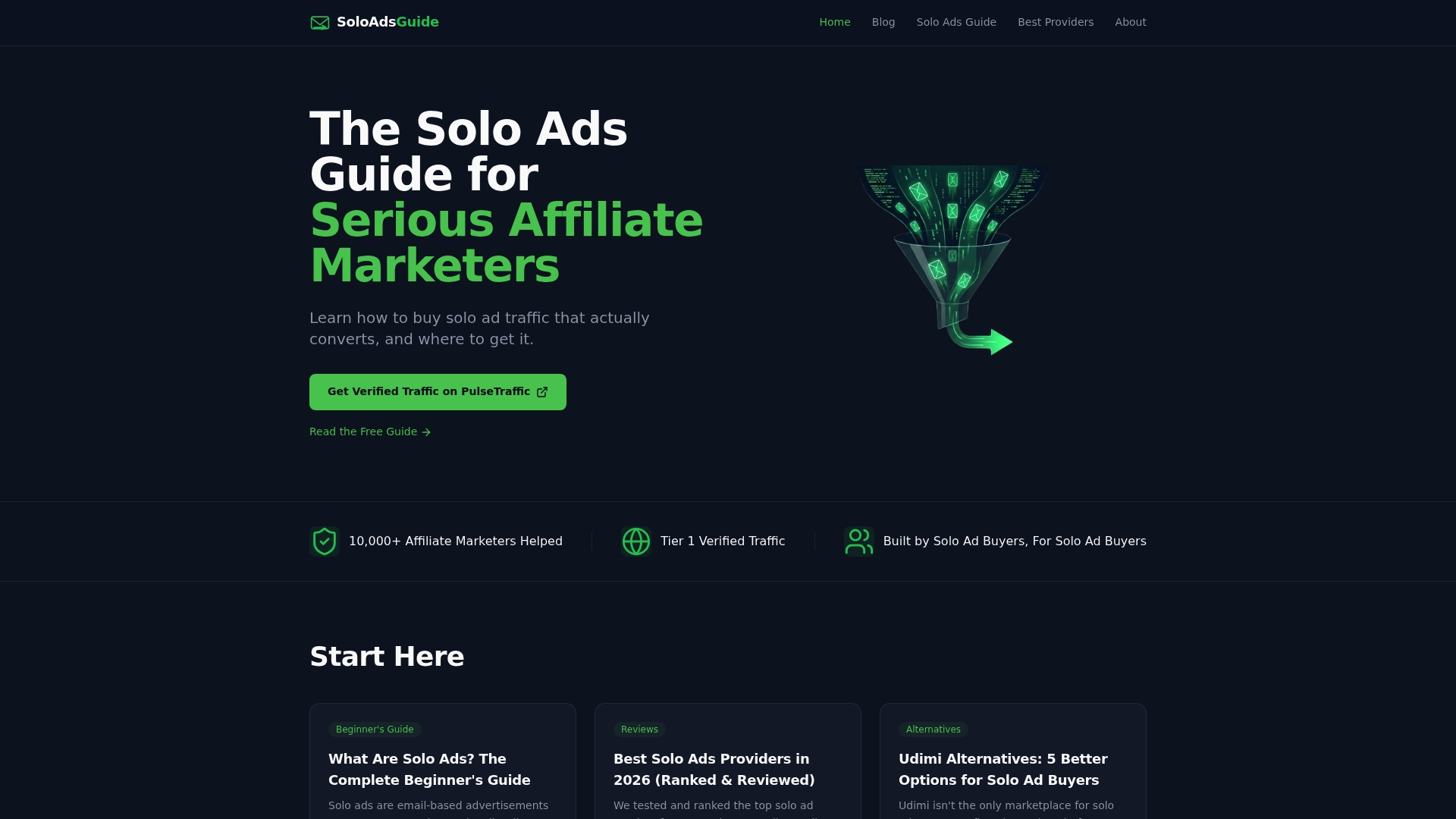
Soloadsguide ranks and reviews the best solo ads providers in 2026, with verified tier-1 traffic sources tested specifically for conversion performance. The platform also covers landing page best practices tailored to solo ad campaigns, so you are not applying generic advice to a specialized traffic channel. Marketers using Soloadsguide have reported a 40% reduction in cost per lead by combining quality vendor selection with focused page design. If you want to see which providers consistently deliver traffic that converts, Soloadsguide is the place to start. You can also review digital ad campaign best practices for 2026 to complement your landing page strategy with broader campaign structure guidance.
FAQ
What is the role of a landing page in solo ad campaigns?
A landing page serves as the conversion destination for solo ad traffic, turning clicks into leads or buyers through a focused, single-goal design. Its primary function is to match the ad's promise and capture the visitor's action before they leave.
What conversion rate should I expect from a solo ad landing page?
The 2026 median landing page conversion rate sits between 4.02% and 6.6%, with top-performing pages reaching 11.45% or higher. Well-optimized squeeze pages with strong message match regularly hit the upper end of that range.
How many CTAs should a solo ad landing page have?
One CTA per page is the standard for best results. Single-CTA pages convert at an average of 13.5%, while pages with multiple CTAs see lower rates due to choice paralysis.
How does page load speed affect solo ad performance?
Every additional second of load time reduces conversions by 4% to 8%, with a three-second delay causing up to 21% conversion loss. Pages should load in under three seconds on mobile to avoid losing paid traffic before the offer is seen.
Should I use the same landing page for different solo ad vendors?
No. Building one page per audience segment or ad group keeps message match tight and makes A/B test results readable. Mixing traffic sources on one page makes it impossible to identify what is driving or hurting performance.
Recommended
- Grow Your Email List With Solo Ads Quickly
- Solo Ads Small Business Lead Generation Guide
- Solo Ads vs Paid Social Ads: 2026 Marketer's Guide
- How to Buy Solo Ads That Actually Convert (Step-by-Step)
Want Verified Traffic Without the Guesswork?
PulseTraffic screens every seller, filters bot clicks in real time, and shows you verified buyer traffic labels before you spend a dollar.