

Vetting solo ad sellers is the process of systematically evaluating their traffic quality, transparency, and reliability before you spend a dollar, so you get genuine leads that actually convert. Knowing how to vet solo ad sellers separates affiliate marketers who scale profitably from those who burn through budgets on bot clicks and recycled lists. The industry standard for quality traffic requires a minimum of 80% Tier-1 sources from the USA, UK, Canada, Australia, and New Zealand. Soloadsguide applies exactly these benchmarks when reviewing providers, which is why its recommendations consistently outperform generic traffic directories.
What do you need before you start evaluating solo ad providers?
Two things must be in place before you contact a single seller: an independent tracking tool and a tested funnel. Without both, you cannot verify anything a seller tells you.
Independent tracking is non-negotiable. Professional marketers use tools like ClickMagick, Voluum, or PulseTrack to verify clicks outside the seller's own dashboard. PulseTrack is the preferred choice for solo ad buyers because it combines fraud detection, click rotation, and clean attribution in one place. Reported clicks deviating by more than 5% from your independent tracker is a direct fraud indicator. That single data point tells you more than any testimonial.

Your funnel must be ready before you buy. A squeeze page with a clear lead magnet, a thank-you page, and a working autoresponder sequence are the minimum. You need a real opt-in rate baseline to measure against. Without it, you cannot tell whether a 25% opt-in rate is the seller's fault or yours.
Before reaching out to any seller, gather these data points:
- Traffic geography: Ask for a breakdown showing the percentage of Tier-1 clicks. Anything below 70% Tier-1 composition is a red flag in 2026.
- Opt-in rate history: Request screenshots from recent campaigns, ideally with third-party tracking visible.
- List-building method: Ask how the seller built their list. Paid traffic sources generally produce fresher, more responsive subscribers than scraped or co-registration lists.
- Replacement policy: Confirm whether the seller offers make-up clicks if delivery falls short.
- Delivery timeframe: Get a clear start date and completion window in writing.
Pro Tip: Set up your tracking link in PulseTrack before you send it to the seller. This gives you a clean baseline from the moment traffic starts, with no gaps in attribution.
What is the 6-point checklist for vetting a solo ad seller?
Run every seller through these six checks before you place an order. Each one takes a few minutes, and together they catch most of the problems that burn new buyers.
- Recent reviews. Sort reviews by date and look for positive feedback from the last 30 to 60 days. Strong reviews from two years ago with nothing recent can mean the list has gone stale.
- Sales, not just opt-ins. Look for reviews that mention actual sales. "Good opt-in rate" is useful; "good opt-in rate and a few sales" tells you the list contains buyers.
- Country breakdown. Do not accept a headline "Tier 1" figure on its own. Ask for the country split, especially if your offer is written for a US audience.
- Niche match. A seller who does well in personal development will not automatically do well for crypto or ecommerce. Match the seller's main niche to your offer.
- List freshness. Ask whether the seller is still adding new subscribers and how they build the list. A list that has been mailed the same offers for years tends to fatigue.
- Written shortfall policy. Ask what happens if delivery falls short, and get the answer in writing before you pay. A written policy is worth far more than a verbal promise.
How do you evaluate a solo ad seller's traffic quality step by step?
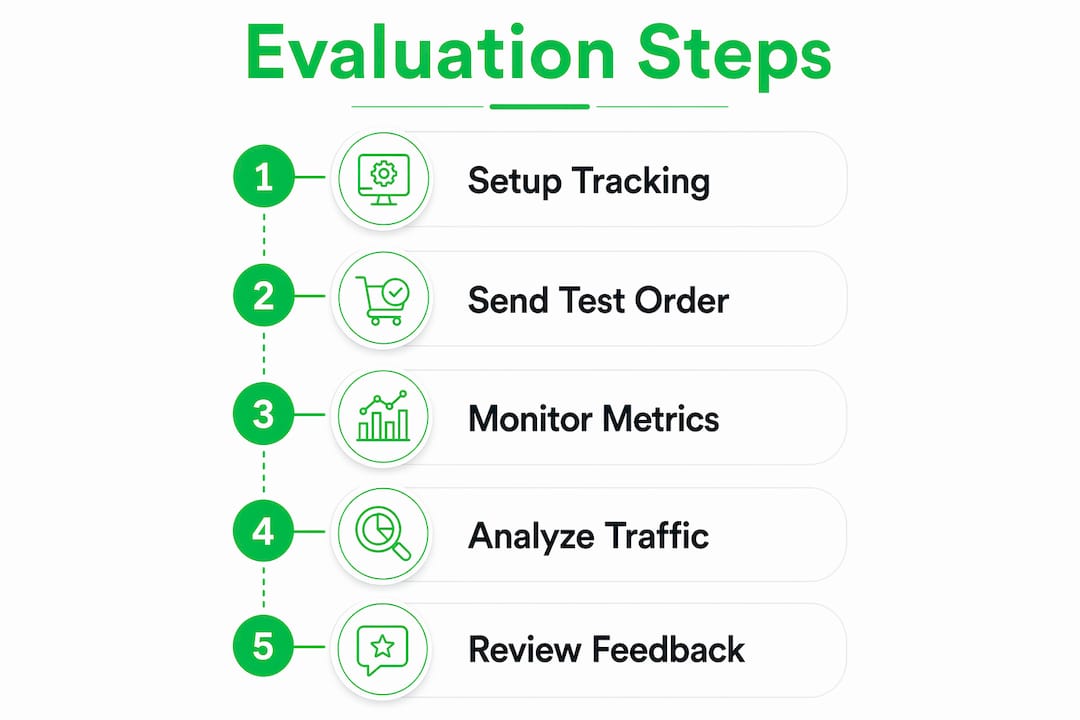
A structured test process protects your budget and produces data you can act on. Follow these steps in order.
-
Request real tracking data first. Ask the seller for screenshots from recent campaigns that show an independent tracker, not just their own dashboard. Independent tracking is more reliable than vendor dashboards because many sellers control the numbers their dashboards display. If a seller refuses to share third-party verified data, that refusal is your answer.
-
Ask the seller to review your funnel. Reputable sellers review your funnel before accepting orders to confirm offer alignment. A seller who asks about your niche, your lead magnet, and your thank-you page is showing genuine interest in your results. A seller who takes your money without asking a single question is treating you as a transaction.
-
Place a small test order of 100–200 clicks. This range costs roughly $50–$150 and gives you enough data to calculate opt-in rate and cost per lead without serious risk. Aim for opt-in rates between 35% and 45% during the test phase. Rates below 25% on a proven squeeze page point to low-quality traffic.
-
Monitor your tracker in real time. Watch for click spikes, unusual bounce rates, and geographic anomalies. If 60% of clicks arrive from countries outside your Tier-1 target within the first hour, contact the seller immediately.
-
Compare your tracker to the seller's reported numbers. A deviation of more than 5% signals a problem. Document everything with timestamps.
-
Calculate cost per lead, not cost per click. Divide your total spend by the number of opt-ins your tracker recorded. This is the only number that tells you whether the campaign was profitable.
Here is a simple reference for interpreting your test results:
| Metric | Healthy range | Warning sign |
|---|---|---|
| Tier-1 traffic percentage | 80% or above | Below 70% |
| Opt-in rate | 35%–45% | Below 25% |
| Click deviation (tracker vs. seller) | Within 5% | Above 5% |
| Cost per lead (Tier-1, optimized funnel) | Under $2.00 | Above $4.00 |
Pro Tip: Link your PulseTrack URL directly to your squeeze page and set up a goal for opt-ins. You will see cost per lead update in real time as the campaign runs, so you can pause immediately if numbers go sideways.
What are the red flags to watch for when selecting solo ad sellers?
The most common mistake buyers make is chasing the lowest cost per click. Extremely low CPC often signals bot traffic or poor-quality lists. A sustainable cost per lead under $2 for Tier-1 traffic on an optimized funnel is the real benchmark. Anything that looks too cheap to be true usually is.
Watch for these specific warning signs:
- Pressure sales tactics. Sellers who push "limited spots" or "today only" pricing before you have asked a single question are prioritizing your urgency over your results.
- Fake or unverifiable testimonials. Screenshots of results without dates, tracker data, or contact details are easy to fabricate. Ask for references you can actually reach.
- Refusal to accept your tracking link. Walk away if a vendor refuses independent tracking or only provides dashboard screenshots. This is the clearest sign of a seller who cannot withstand scrutiny.
- No make-up click guarantee. Genuine sellers provide make-up clicks if traffic falls short, but this must be agreed before the campaign starts. Sellers who dismiss the question are telling you they do not stand behind their delivery.
- Vague answers about list-building methods. Transparency about how a list was built is a hallmark of trustworthy vendors. Evasive answers mean the list may be old, rented, or scraped.
"Reputable vendors engage in dialogue about your funnel and list-building methods, emphasizing a partnership approach rather than a transaction." This distinction separates sellers who care about repeat business from those who disappear after payment clears.
Understanding lead generation fundamentals also helps you ask better questions. When you know what a healthy lead pipeline looks like, you can spot a seller who is padding numbers far more quickly.
How do you use references and buyer feedback to confirm seller credibility?
References are the fastest shortcut in the vetting process. Ask the seller for contact details of a buyer who spent $500 or more within the last 60 days. A verified reference buyer at that spending level confirms the vendor has a real, satisfied customer base. Sellers who cannot produce a single recent reference almost certainly lack recurring satisfied buyers.
When you speak with a reference, ask these specific questions:
- Did the traffic arrive on schedule and in full?
- What opt-in rate did you see, and did it match the seller's estimate?
- Did the seller communicate proactively if anything changed?
- Would you buy from this seller again?
Beyond direct references, check marketplace metrics. Repeat buyer rate on solo ad marketplaces is a meaningful indicator of consistency and traffic quality. High repeat buyer percentages correlate directly with trustworthy vendors. A seller with a 60% repeat buyer rate has earned that number through consistent delivery, not marketing copy.
Public reviews require a more careful read. Look for reviews that mention specific metrics like opt-in rates, delivery speed, and communication quality. Generic five-star reviews with no detail are easy to manufacture. Reviews that include actual numbers and describe a specific campaign experience carry real weight.
The role of email list quality in solo ad performance is significant. A seller's list age, source, and engagement history directly affect your opt-in rate, so asking about list composition is not optional.
Key Takeaways
Vetting solo ad sellers requires independent tracking, a tested funnel, and a structured test order before you commit serious budget to any provider.
| Point | Details |
|---|---|
| Use independent tracking | PulseTrack, ClickMagick, or Voluum must verify clicks outside the seller's dashboard. |
| Require 80% Tier-1 traffic | Traffic below 70% Tier-1 composition is a red flag and signals low conversion potential. |
| Test with 100–200 clicks first | A small test order limits risk and generates real opt-in rate and CPL data. |
| Measure cost per lead, not CPC | Sustainable CPL under $2 on an optimized funnel is the real performance benchmark. |
| Verify references and repeat buyers | A recent buyer who spent $500+ and a high repeat buyer rate confirm genuine seller reliability. |
What I have learned from years of buying solo ad traffic
The single biggest shift in my thinking came when I stopped asking "how much per click?" and started asking "what will this cost me per lead?" Those are completely different questions, and only one of them tells you whether a campaign is worth scaling.
I have seen affiliate marketers with solid funnels waste thousands because they trusted a seller's dashboard over their own tracker. The dashboard showed 500 clicks. The tracker showed 480, with 40% coming from outside Tier-1 countries. The opt-in rate was 11%. The seller called it a "list warm-up issue." It was not. It was a bad list sold to someone who did not verify the data independently.
The sellers I trust most are the ones who push back on me. They ask about my offer, my lead magnet, and my thank-you page sequence. They tell me if my funnel is not a good fit for their list. That kind of honesty costs them a sale in the short term. It also tells me they are protecting their list's engagement rate, which means the traffic they send me will actually open emails and click links.
Scale slowly after a successful test. A 100-click test that produces a 40% opt-in rate and a $1.50 CPL is not a green light to immediately order 2,000 clicks. Order 300 next. Then 500. Confirm the numbers hold before you commit a real budget. Scaling campaigns only after verifying vendor reliability avoids rapid budget waste and protects your ROI.
The vetting process feels slow the first time. After two or three campaigns with the same seller, it takes 20 minutes. That investment pays for itself on the first order that actually converts.
— Phil
Soloadsguide makes finding vetted sellers faster
Applying every step in this guide from scratch takes time, especially when you are evaluating a seller for the first time. Soloadsguide shortens that process by doing the foundational work for you.

The best solo ad providers for 2026 are ranked and reviewed on Soloadsguide using the same criteria covered here: Tier-1 traffic percentage, opt-in rate history, seller transparency, and verified buyer feedback. Each listing reflects real campaign data, not paid placements. If you want to skip the cold outreach and start with sellers who have already passed a structured vetting process, the Soloadsguide ranked list is the right starting point. You can also explore the affiliate funnel guide to make sure your funnel is ready before your first order lands.
FAQ
What is the minimum Tier-1 traffic percentage to accept?
The industry standard requires at least 80% Tier-1 traffic from the USA, UK, Canada, Australia, and New Zealand. Anything below 70% is a red flag in 2026.
How many clicks should I order for a test?
Start with 100–200 clicks at a cost of roughly $50–$150. This range gives you enough data to calculate opt-in rate and cost per lead without significant financial risk.
Why is cost per lead more important than cost per click?
Cost per click tells you what you paid for traffic. Cost per lead tells you whether that traffic produced results. A sustainable CPL under $2 for Tier-1 traffic on an optimized funnel is the real benchmark for a profitable campaign.
What should I do if a seller refuses my tracking link?
Walk away. Refusal to accept an independent tracking link from tools like PulseTrack, ClickMagick, or Voluum is a direct indicator of unreliability. Legitimate sellers welcome external verification.
How do I verify that a solo ad seller's references are genuine?
Ask for contact details of a buyer who spent $500 or more within the last 60 days. Speak with them directly and ask about delivery, opt-in rates, and communication. Generic testimonials without dates or metrics are not sufficient verification.
Recommended
- How to Vet Solo Ad Sellers (Before You Spend a Dollar)
- How to Avoid Solo Ad Scams: 2026 Buyer's Guide
- Solo Ads Blog, Tips, Guides & Reviews | SoloAdsGuide.com
- Solo Ads Small Business Lead Generation Guide
Want Verified Traffic Without the Guesswork?
PulseTraffic screens every seller, filters bot clicks in real time, and shows you verified buyer traffic labels before you spend a dollar.