

Buyer traffic in solo ads is defined as clicks from email subscribers who have already demonstrated a willingness to purchase products in a specific niche. These are not casual browsers. They are pre-qualified leads who have opted into lists, bought products before, or engaged consistently with commercial emails. Understanding what does buyer traffic mean in solo ads separates marketers who build profitable campaigns from those who burn budget on unresponsive clicks. In 2026, with solo ad pricing running $0.30–$1.00 per unique click, knowing exactly what you are buying matters more than ever. Soloadsguide exists to help you make that distinction clearly and confidently.
What does buyer traffic mean in solo ads?
Buyer traffic is the industry term for high-intent, purchase-ready visitors delivered through solo ad campaigns. A solo ad is a paid email broadcast sent by a list owner to their subscribers on your behalf. The list owner writes or approves a single email promoting your offer, and every click that email generates goes to your landing page. You pay per unique human click, not per impression or per email sent.
The critical word in "buyer traffic" is buyer. Not every email subscriber qualifies. A buyer traffic list contains people who have previously purchased digital products, responded to commercial offers, or consistently clicked on promotional emails. This is distinct from a freebie-seeker list, where subscribers signed up for a free download and rarely open anything with a price tag attached.

Solo ad traffic is sold in batches of 100–500 clicks, filtered to remove bots and duplicate visits. That filtering step is what separates a legitimate vendor from one selling inflated numbers. The metric that matters is unique human clicks, not raw click volume.
How solo ads source and deliver buyer traffic
Solo ad vendors build their email lists over months or years by running their own paid campaigns, creating lead magnets, and promoting affiliate offers. The best vendors specialize in a single niche, such as make-money-online, health, or personal development. That specialization is what makes their traffic valuable to you.
Traffic quality is also tied to geography. Tier-1 traffic from the United States, United Kingdom, Canada, and Australia consistently converts better than traffic from other regions. Tier-1 email lists consist of pre-warmed, problem-aware subscribers who are familiar with affiliate marketing offers and respond to well-crafted email copy. When a vendor claims to offer buyer traffic, you should verify that their list is predominantly Tier-1.
Here is what a legitimate buyer traffic delivery process looks like:
- List composition: Subscribers have purchased at least one digital product in the niche.
- Bot filtering: Vendors use click-tracking software to strip duplicate IPs and known bot signatures before reporting your click count.
- Geo verification: Vendors provide a geo split report showing the percentage of clicks from Tier-1 countries.
- Click timestamps: Delivery logs show when each click arrived, confirming organic spread rather than a sudden bot dump.
- Niche alignment: The vendor's list matches your offer category, such as affiliate marketing, weight loss, or business opportunities.
Pro Tip: Always ask a vendor for a recent traffic stats screenshot before buying. A legitimate seller will show you opt-in rates, Tier-1 percentages, and click timestamps without hesitation.
Solo ads avoid platform bans that affect paid social campaigns, but they require you to manually verify vendor reputation. There is no algorithm protecting you here. Due diligence is your only safeguard.
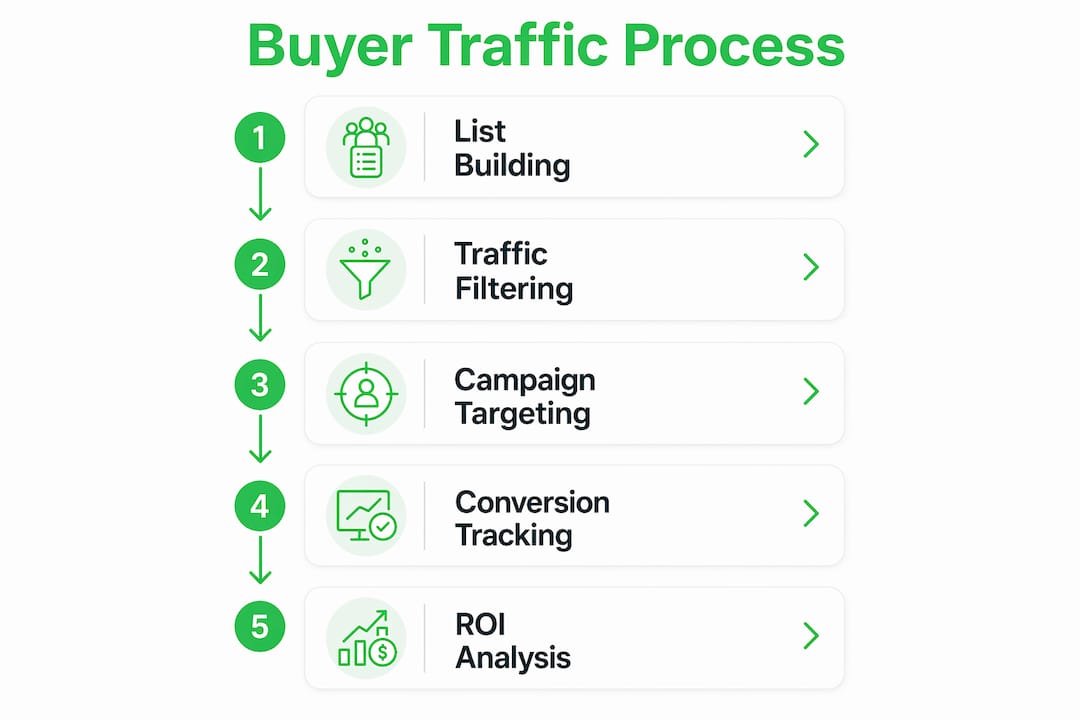
Why buyer traffic quality drives solo ads effectiveness and ROI
Buyer traffic converts at a higher rate than generic email traffic because the subscribers already understand the type of offer you are promoting. They have seen sales pages, they recognize opt-in forms, and they are comfortable clicking through to learn more. That behavioral history is what makes them valuable.
The most important metric for measuring solo ads effectiveness is not your front-end sales. 60–70% of affiliate revenue from solo ad campaigns accumulates over 30 days through email follow-up sequences, not from the initial click. Judging a campaign by day-one sales is the single most common mistake marketers make. It leads to killing profitable campaigns too early.
| Campaign type | Typical 30-day ROI | Key factor |
|---|---|---|
| Squeeze page + follow-up sequence | +30% to +100% | Buyer traffic captured as subscribers |
| Direct-to-sales page | -20% to -70% | No list built, no follow-up possible |
| Squeeze page, no follow-up | Breakeven or slight loss | Traffic captured but not monetized |
High-performing campaigns consistently use squeeze pages paired with 7–30 day follow-up sequences. The table above shows why skipping either element destroys ROI regardless of traffic quality.
Cost per subscriber (CPS) is a more reliable efficiency metric than cost per click. A CPS below $2 with a solid funnel signals healthy buyer traffic conversion. A CPS above $4 points to either poor traffic quality or a misaligned funnel. Tracking this number tells you exactly where the problem is.
Pro Tip: Calculate your CPS after every campaign by dividing total spend by total new subscribers. If it creeps above $3, audit your squeeze page headline and offer before blaming the vendor.
Funnel alignment matters as much as traffic quality. Even buyer traffic fails to convert when the squeeze page offer does not match the audience's expectations. A weight-loss list sent to a cryptocurrency offer will not convert, no matter how engaged those subscribers are.
Common misconceptions about buyer traffic in solo ads
The biggest misconception is that solo ads are a shortcut to fast profits. Experts consistently clarify that solo ads are tools for testing funnels and building email assets, not for generating immediate revenue. Treating them as a get-rich-quick mechanism leads to wasted spend and false conclusions about traffic quality.
Several other misconceptions cause real damage to campaigns:
- Sending traffic directly to a sales page. This skips list building entirely. You spend money, get no subscribers, and have nothing to follow up with.
- Blaming traffic for poor results. Funnel misalignment is the leading cause of low conversions, not bad traffic. Check your squeeze page and email sequence before switching vendors.
- Buying from the cheapest vendor. Low prices often signal bot-heavy or unengaged lists falsely labeled as buyer traffic. Price is not the only filter, but suspiciously cheap clicks are a red flag.
- Testing only one vendor. A single vendor result tells you almost nothing. You need data from multiple sources to identify which lists genuinely deliver buyer traffic.
- Ignoring click verification. Without a tracking tool to catch low-quality clicks, you cannot distinguish real buyer traffic from inflated numbers.
The cost-per-subscriber metric protects you from all of these traps. It forces you to measure what actually matters: how many real, engaged subscribers you added to your list for the money you spent.
How to optimize your campaigns to convert buyer traffic
Getting buyer traffic to your page is only the first step. Converting it into subscribers and sales requires a deliberate campaign structure. Follow these steps in order:
- Build a dedicated squeeze page. Route all solo ad traffic to a single opt-in page with one clear offer. Professional campaigns always capture emails before presenting any sales offer.
- Write a 7–30 day follow-up sequence. Most conversions happen after the third or fourth email. Plan your sequence before you buy traffic, not after.
- Vet vendors with transparent metrics. Use Soloadsguide's vendor vetting checklist to evaluate Tier-1 percentages, opt-in rates, and click timestamps before committing budget.
- Start with a small test batch. Buy 100–200 clicks from a new vendor before scaling. A small test reveals traffic quality without risking your full budget.
- Tag every campaign with UTM parameters. UTM tracking lets you identify which vendor and which traffic source drives actual conversions inside your funnel.
- Track cost per subscriber after every campaign. Compare CPS across vendors to identify which sources deliver genuine buyer traffic at a sustainable cost.
- Combine solo ads with other traffic sources. Multi-channel funnels can increase sales by 20–25%, making your solo ad subscribers more valuable when retargeted through additional channels.
Key Takeaways
Buyer traffic in solo ads is the foundation of profitable campaigns, and its value depends entirely on funnel alignment, vendor quality, and 30-day ROI measurement rather than front-end sales.
| Point | Details |
|---|---|
| Buyer traffic definition | Clicks from purchase-ready email subscribers, not generic or freebie-seeker traffic. |
| Pricing and batch size | Solo ads cost $0.30–$1.00 per unique click in 2026, sold in batches of 100–500 clicks. |
| ROI measurement window | Judge campaigns at 30 days, since 60–70% of revenue comes from follow-up email sequences. |
| Funnel alignment is critical | Even high-quality buyer traffic fails without a squeeze page and a follow-up sequence in place. |
| Cost per subscriber benchmark | A CPS below $2 signals healthy conversion; above $4 indicates a traffic or funnel problem. |
Why I think most marketers misread buyer traffic entirely
The phrase "buyer traffic" gets thrown around in solo ads circles as if it is a magic label that guarantees results. My experience tells a different story. The traffic quality is real, but it is only half the equation. The other half is what you do with it in the 30 days after the click.
I have seen marketers with access to genuinely strong Tier-1 buyer lists walk away convinced that solo ads do not work. Every single time, the problem was the funnel, not the traffic. They sent clicks to a sales page with no squeeze page, collected zero subscribers, and had nothing to follow up with. The traffic did exactly what it was supposed to do. The funnel failed.
The other trap I see constantly is judging campaigns too early. A marketer buys 200 clicks, checks sales on day two, sees nothing, and writes off the vendor. But most solo ad revenue builds over 30 days through follow-up emails. Cutting a campaign at day two is like leaving a job interview after the first question.
Solo ads also have a structural advantage that rarely gets discussed. They bypass social platform restrictions and tracking privacy changes that have made paid social increasingly unpredictable. Your email list is an asset you own. Every subscriber you capture from buyer traffic is a contact you can reach again without paying for another ad. That compounding value is what makes solo ads worth the learning curve.
My honest advice: treat your first three or four campaigns as paid education. Test vendors, track CPS, and refine your funnel. Profitability follows data, not luck.
— Phil
Finding quality buyer traffic through Soloadsguide
Knowing what buyer traffic means is one thing. Finding vendors who actually deliver it is another challenge entirely.
Soloadsguide maintains a ranked and reviewed list of trusted solo ad providers tested specifically for Tier-1 buyer traffic quality and conversion performance. Each vendor on the list has been evaluated for geo splits, opt-in rates, and list engagement, so you are not starting from zero. The guide also covers cost per lead optimization and vendor vetting in detail, giving you the full picture before you spend a dollar. If you are ready to run campaigns backed by verified buyer traffic, the provider list is the right place to start.
FAQ
What does buyer traffic mean in solo ads?
Buyer traffic refers to clicks from email subscribers who have previously purchased products in a specific niche, making them more likely to convert on your offer than general or freebie-seeker traffic.
What are solo ads and how do they work?
Solo ads are paid email broadcasts where a list owner sends a single promotional email to their subscribers on your behalf, and you pay per unique human click delivered to your landing page.
How do I know if a vendor is delivering real buyer traffic?
Ask for a geo split report, click timestamps, and recent opt-in rate data. A CPS below $2 after your campaign confirms the traffic is converting at a healthy rate.
Why should I use a squeeze page with solo ad buyer traffic?
Sending buyer traffic directly to a sales page skips list building entirely. Campaigns without squeeze pages typically lose 20–70% of their investment because there is no follow-up sequence to capture delayed conversions.
How long should I wait before judging a solo ad campaign?
Evaluate campaigns at the 30-day mark. Since 60–70% of affiliate revenue from solo ads comes from email follow-up sequences, day-one or day-two results are not a reliable measure of campaign performance.
Recommended
- The Solo Ads Guide for Affiliate Marketers
- How to Track Solo Ad Traffic (Catch Low-Quality Clicks)
- Top 6 Sources for Solo Ad Providers with Buyer Traffic 2026
- How to Avoid Solo Ad Scams: 2026 Buyer's Guide
Want Verified Traffic Without the Guesswork?
PulseTraffic screens every seller, filters bot clicks in real time, and shows you verified buyer traffic labels before you spend a dollar.