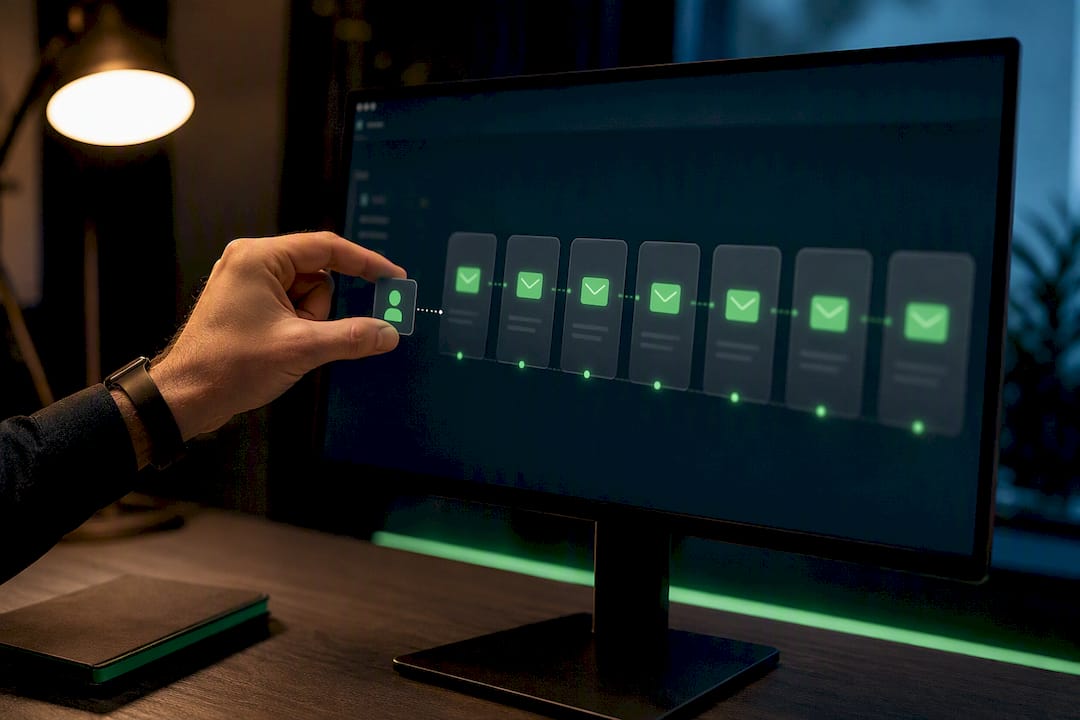
Use a blast, meaning a solo ad, to drive cold traffic into your own capture funnel, then convert that traffic with a drip sequence you control. Blasts are for rapid acquisition and list building. Drips are for onboarding, trust, and monetization. The workflow that works: send solo ad clicks to a squeeze page, capture the lead, then enroll every new subscriber into a drip sequence immediately. Measurement and suppression rules differ for each, and skipping either one wastes the money you just spent on traffic.
TL;DR:
- Successful solo ad campaigns require building a dedicated squeeze page, thank-you page, and seven pre-written drip emails before purchasing any traffic.
- Track sales per 100 clicks rather than opt-in rates to accurately measure campaign profitability and avoid misleading success metrics.
- Implement a strict owner and suppression rules to prevent message overlap, subscriber fatigue, and unintended unsubscribes when running both blasts and drips simultaneously.
- Vet solo ad vendors carefully by confirming niche relevance, requesting click proof, and testing small batches to avoid bot traffic, overmailing, and irrelevant audiences.
- Focus on data-driven decisions and ownership of the customer journey to turn initial traffic into long-term revenue, not just vanity opt-in numbers.
Table of Contents
- Drip vs. Blast Solo Ads: Comparing Mechanics and Use Cases
- How to Turn Solo Ad Blasts Into a Working Drip Funnel
- What to Measure: Blast KPIs vs. Drip KPIs
- Rules for Running Blasts and Drips Without Colliding
- Solo Ad Vendor Risks and How to Vet Before You Buy
- What Solo Ad Buyers Get Wrong About Traffic
- Where SoloAdsGuide Fits Into Your Funnel
- Sources
- FAQ
Drip vs. Blast Solo Ads: Comparing Mechanics and Use Cases
An email blast is a one-off, calendar-driven send. It goes out because a date arrived, not because a subscriber did anything specific. A drip campaign is the opposite: an automated sequence triggered by a signup, a click, or a behavior, and it runs on the subscriber's timeline instead of yours. In solo ad terms, the "blast" is the traffic event itself. Someone else's list gets a single email pointing to your offer. The drip is what happens after that click, once that stranger becomes your subscriber.
Blasts fit specific jobs well:
- Launching a new offer or promotion with a hard deadline
- Testing a new angle or lead magnet against cold traffic fast
- Building initial list volume through purchased solo ad clicks
- Announcing something time-sensitive to an existing list
Drips fit a different set of jobs:
- Welcoming a new subscriber and setting expectations for what's coming
- Building trust before asking for a purchase
- Nurturing cold solo-ad traffic that isn't ready to buy on click one
- Delivering a sequence of value-driven micro-offers over days or weeks
The ownership question matters more than most marketers realize. A blast is owned by whoever controls the calendar. A drip is owned by whoever controls the customer journey. When solo ad traffic hits your funnel, you become that journey owner the moment they opt in, and every email after that should reflect the state of that individual subscriber, not a date on your marketing calendar.
How to Turn Solo Ad Blasts Into a Working Drip Funnel
Buying clicks before your funnel exists is the single most common way affiliate marketers burn a budget with nothing to show for it. Build the assets first, then buy traffic. Here's the sequence:
- Build the capture page. A single, focused squeeze page with one call to action, not your general homepage.
- Build the bridge page. A thank-you or bridge page that reinforces the promise made on the squeeze page before the subscriber sees any offer.
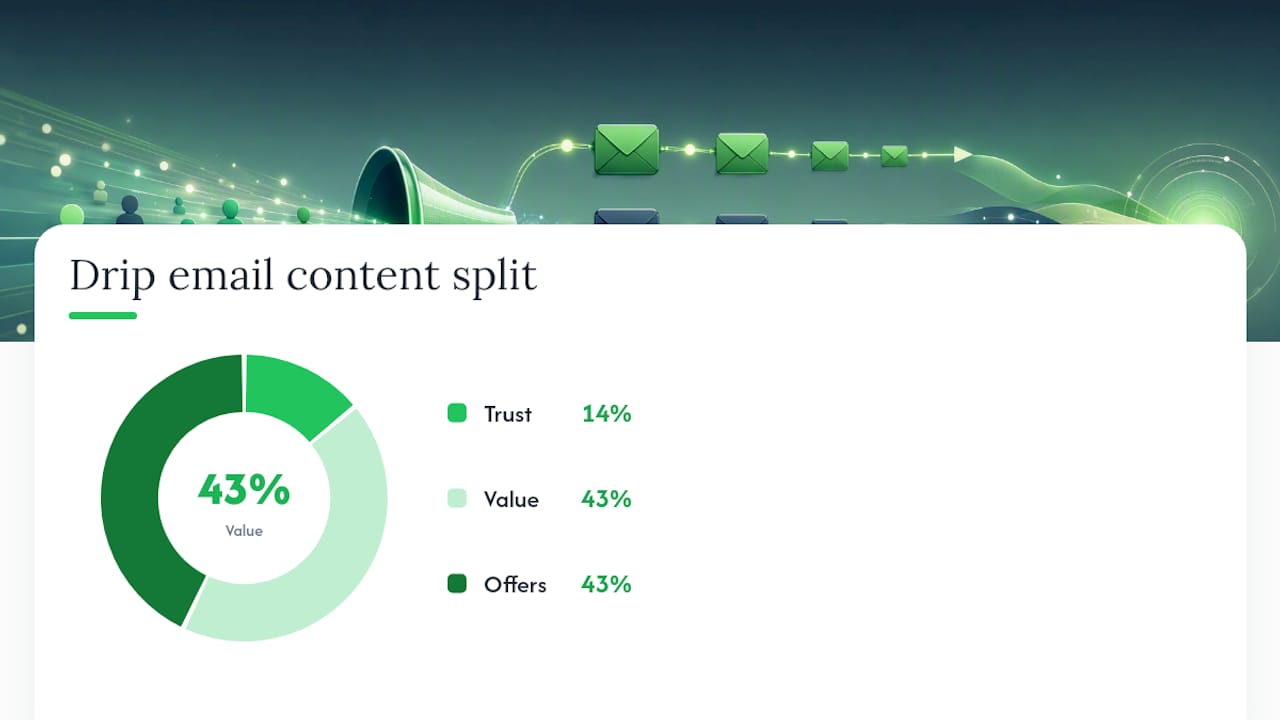
- Write the first seven drip emails before you buy a single click. Email one builds trust, emails two through four deliver value tied to the original hook, and emails five through seven introduce your micro-offer, your main offer, and a follow-up for non-buyers.
- Tag everything. UTM parameters on every link, a click tracker between the vendor's list and your capture page, and conversion pixels on your thank-you and sales pages.
- Buy a small test batch. Purchase 100 clicks from the vendor, not 500, and track opt-ins and sales per 100 clicks before committing more budget.
- Decide from data, not hope. If the test batch converts, scale in controlled increments. If it doesn't, stop and diagnose before buying more.
Never point purchased traffic directly at a vendor's default sales page or a generic affiliate link. You lose the subscriber, the data, and any chance to run a drip sequence on that lead ever again. Capturing the click on your own squeeze page is non-negotiable if you want to own that relationship long term.
Pro Tip: Draft your seven emails around a single theme before you write a single word of copy. A drip that jumps between five unrelated ideas confuses new subscribers and tanks open rates by email three.
What to Measure: Blast KPIs vs. Drip KPIs
Blasts and drips get judged on different numbers, and mixing them up leads to bad scaling decisions.
For a blast (your solo ad buy), track:
- Clicks bought and clicks delivered (they're rarely identical)
- Opt-in rate on your squeeze page
- Sales per 100 clicks, the number that actually pays your bills
- Complaint and unsubscribe rates in the days following the send
For a drip, track:
- Conversion rate per enrolled contact, not per email opened
- Time to first conversion, measured in days
- Revenue per contact over a 30 to 90 day window
Here's the trap most new buyers fall into: a high opt-in rate feels like success, but it means nothing if sales per click stays flat. Sales-per-click is the decisive number. Test with a holdout, meaning a segment of subscribers you deliberately exclude from an offer, and compare their behavior against the group that received it before deciding whether that offer earns a permanent spot in your drip.
Rules for Running Blasts and Drips Without Colliding
Running both message types at once without a system invites duplicate sends, subscriber fatigue, and unsubscribes you can't trace back to a cause. Best practice is to give each message type one owner and enforce a global suppression rule across both. That means before any solo-ad-driven blast goes out to your existing list, someone checks it against everyone currently mid-drip.
Practical rules that prevent collisions:
- Assign a single person or role as owner of blast sends and a separate owner for drip logic
- Set frequency caps so no subscriber gets more than one message in a 24-hour window regardless of source
- Run a suppression preview before every blast to catch anyone currently inside an active drip
- Build exclusion segments and workflow exit rules directly into your ESP so a purchase or unsubscribe pulls someone out automatically
Pro Tip: Tag every subscriber with their entry source (solo ad vendor name, date, and squeeze page) at signup. When something breaks six weeks later, that tag tells you exactly which traffic source to investigate first.
Solo Ad Vendor Risks and How to Vet Before You Buy
Solo ad traffic carries real risk, and most of it is invisible until you've already spent the money. The three biggest problems: bot traffic dressed up as real clicks, lists that get overmailed to the point subscribers ignore everything, and incentivized clicks from people who never wanted your offer in the first place.
Vet before you buy, not after:
- Ask the vendor what niche their list is built around, and confirm it matches your offer.
- Request click proof and recent conversion cases from other buyers, not just opt-in screenshots.
- Insist on a 100-click test before committing to a larger package.
- Run that test against your own tracked squeeze page, never a vendor-hosted page.
- Apply a structured framework rather than trusting a sales pitch on faith.
Soloadsguide's 21-question vendor vetting framework exists specifically because most vendors overpromise and most buyers don't know what to ask. Solo ad traffic also tends to skew heavily toward biz-op and make-money-online audiences, so matching list niche to your offer matters more here than in most traffic sources.
If your 100-click test underperforms, stop. Don't rationalize a bad batch as "warming up." Investigate whether the traffic converted anywhere, check your tracking setup for errors. If the vendor's traffic simply doesn't match your offer, move on rather than doubling down on a bad source.
- Bot or fraudulent clicks that inflate delivery numbers without real humans behind them
- Overmailed lists where subscribers have stopped responding to anything
- Incentivized or curiosity clicks that never intended to see your offer
What Solo Ad Buyers Get Wrong About Traffic
Profitable solo ad buyers treat traffic as fuel for a system, not as a scoreboard. A high opt-in rate feels like a win the first time you see it, until you realize it didn't move a single sale. The buyers who last are the ones tracking sales per 100 clicks from their very first test batch, even when that number is embarrassing.
Expect the first few buys to feel like tuition. You're paying for vendor literacy and tracking discipline, not immediate profit. Protect your list ownership, measure honestly, and let the data decide which vendors and which drip sequences earn a bigger budget next time.
— Philip Coble
Where SoloAdsGuide Fits Into Your Funnel
This resource offers a buyer-first alternative to trusting a vendor's sales pitch at face value. Instead of vanity opt-in numbers, it provides a 21-question vendor vetting checklist, click-tracking setup guides, and funnel templates built specifically for turning solo ad blasts into working drip sequences.
Use the checklist before your next purchase to screen a vendor's list niche, request conversion proof, and confirm they'll support a 100-click test without pressuring you into a bigger package upfront. Pair that with the funnel conversion guide to make sure your squeeze page, bridge page, and first seven emails are ready before a single click arrives. Visit Soloadsguide to download the vetting checklist and start your next solo ad buy with a system in place instead of a guess.
Sources
FAQ
What Is the Difference Between a Drip and a Blast Solo Ad?
A blast is a one-time, calendar-driven send, which describes how a solo ad delivers traffic. A drip is an automated sequence triggered by subscriber behavior, which is what should happen after that traffic opts into your list.
Are Solo Ads Worth It for Affiliate Marketers?
Solo ads can work when the vendor's list niche matches your offer and you test with a small batch before scaling, but they carry real fraud and mismatch risk. Vetting with a framework like Soloadsguide's 21-question checklist before buying reduces that risk considerably.
Why Is It Called a Drip Campaign?
The name comes from the idea of releasing information gradually, like water dripping, rather than delivering everything in one send. Each email drips out at a specific point in the subscriber's journey instead of on a fixed calendar date.
Can You Make $10,000 a Month With Affiliate Marketing?
Affiliate income varies enormously by niche, traffic quality, and funnel setup, and no legitimate source can promise a specific monthly figure. What actually moves the needle is tracking sales per 100 clicks and building a tested funnel before scaling traffic spend.
What Is the 3-3-3 Rule for Marketing?
Definitions of the 3-3-3 rule vary across marketing contexts and no single canonical version applies specifically to solo ads or drip sequences. Focus instead on the metrics that do apply here: opt-in rate, sales per click, and time to conversion.
Recommended
- Solo Ad Traffic Affiliate Funnel: A 2026 Guide
- Optimize Your Solo Ad Sales Funnel Conversion in 2026
- Solo Ad Click Tracking Explained for Affiliate Marketers
- Marketers: Verify Solo Ad Traffic With a 100 to 200 Click Test
Want Verified Traffic Without the Guesswork?
PulseTraffic screens every seller, filters bot clicks in real time, and shows you verified buyer traffic labels before you spend a dollar.