

Solo ad deliverability is fixable, but only if you stop treating new leads like they belong on your main list. The single highest-impact move is quarantining every solo-ad lead in its own sequence, vetting the seller who sold you the click, and warming that segment separately before it ever touches your core broadcast list. Everything below builds off that one decision.
TL;DR:
- Quarantining solo-ad leads separately, vetting sellers, and warming those leads before they reach your main list significantly improves inbox placement.
- Engagement scoring changes in 2026 now heavily favor behavioral signals like opens and replies, impacting unknown or unproven solo-ad traffic more than authentication.
- Proper DNS setup with SPF, DKIM, and DMARC, along with gradual warming of new subdomains and IPs, is essential to maintain deliverability and avoid spam traps.
- Always verify leads with email validation, run small test batches, and enforce quarantine rules based on engagement before scaling up solo-ad campaigns.
- Vet your vendors thoroughly using a checklist, demand proof of inbox placement, opt-in ratios, and a test batch to prevent traffic misrepresentation and protect your reputation.
Table of Contents
- What Solo Ad Deliverability Actually Means in 2026
- Setting Up SPF, DKIM, and DMARC Without Breaking Your Domain
- List Hygiene and Vendor Vetting Before You Buy
- How to Warm New Solo-Ad Leads Without Tanking Your Reputation
- Content and Copy That Earns Inbox Placement
- Testing and Monitoring Your Inbox Placement
- The Mistakes That Wreck Deliverability, and How to Recover
- Why Vendor Vetting Experience Matters Here
- Where Solo Ad Deliverability Is Headed
- Get the Vendor Vetting Checklist Before Your Next Buy
- Where to Go Deeper on Technical Setup
- Sources
- FAQ
What Solo Ad Deliverability Actually Means in 2026
Delivery just means the mail server accepted your message. Deliverability means it landed in the inbox instead of spam or promotions. Inbox placement is the real scoreboard, and it's the one metric most affiliates never check until something breaks.
Inbox classifiers changed in 2026. Gmail, Microsoft, and Yahoo now weigh behavioral engagement (opens, replies, how fast someone deletes without reading) more heavily than static authentication checks alone. A practical deliverability checklist still treats authentication as foundational, but engagement scoring is what decides placement once authentication passes. That shift hit solo-ad buyers hard, because solo-ad traffic is inherently unproven: unknown senders, unverified opt-ins, and zero engagement history with your domain. Reporting on the sector shows AI-powered inbox classifiers introduced in 2026 sharply increased the weight placed on subdomain hygiene and early engagement, causing inbox placement to drop fast for operators who kept mixing cold traffic into warm lists.
Watch these metrics before you scale any solo-ad-sourced segment:
- Spam complaint rate (industry guidance targets under 0.1%)
- Bounce rate (keep it under 2%)
- Open rate within the first hour of send, a strong early engagement signal
- Inbox placement percentage from seed testing, not just delivery confirmation
Setting Up SPF, DKIM, and DMARC Without Breaking Your Domain
Authentication is not optional anymore, and it's not hard to get wrong either. Here's the sequence that keeps you safe while you scale.
- Publish SPF first. List every server authorized to send on your behalf. A missing SPF record is one of the fastest ways to get flagged as spoofed.
- Add DKIM signing through your ESP so every message carries a verifiable cryptographic signature tied to your domain.
- Deploy DMARC at
p=noneinitially. This monitoring mode reports on authentication failures without rejecting anything, which lets you catch misconfigurations before they cost you mail. The SPF, DKIM, and DMARC setup guide recommends this cautious migration path specifically because moving straight to enforcement without checking alignment can silently kill legitimate mail. - Move to
p=quarantine, thenp=rejectonly after DMARC reports confirm your legitimate mail is properly aligned. This usually takes several weeks of monitoring, not days. - Create a dedicated sending subdomain (something like
offers.yourdomain.com) for solo-ad traffic. Isolating it protects your root domain's reputation if the subdomain takes a hit, a tactic detailed in how to improve email deliverability. - Warm the subdomain independently. It starts with zero reputation, even if your root domain has years of history.
- Add a dedicated IP only after volume justifies it, typically once you're sending tens of thousands of emails weekly and need isolation from shared-IP neighbors.
- Warm any new IP gradually, starting with your most engaged segment, not cold solo-ad leads.
- Verify your DNS records with a quick lookup tool before your first send, not after a deliverability problem shows up.
Common DNS pitfalls: duplicate SPF records (only one is allowed per domain), forgetting to update SPF when you add a new ESP, and DKIM selectors that don't match what your sending platform expects.
Pro Tip: Run a test send through Mail-tester or a similar spam-score checker before every new subdomain's first real campaign. It catches authentication misalignment in under two minutes, before it becomes a reputation problem.
List Hygiene and Vendor Vetting Before You Buy
Clean lists start with permission, not purchase. Never buy an email list outright. Solo ad transactions should always involve the vendor sending traffic to your own opt-in page, with double opt-in and a CAPTCHA to filter bots before anyone joins your list. Anything else is a shortcut that costs you later.
Once leads land, run them through email verification before they're eligible for broadcast sends, and set suppression rules that automatically remove hard bounces and complaints. Skipping this step is how one bad batch of solo-ad traffic poisons a list you built over years.
Vendor vetting matters just as much as list hygiene, because most deliverability problems trace back to traffic quality at the source. A 21-Question Vendor Vetting Framework exists specifically for this. Five questions worth prioritizing before you send a single dollar to any seller:
- What's the click-to-opt-in ratio on the list this traffic comes from?
- Can you show inbox-placement screenshots from a recent send, not just delivery stats?
- How was this list built, and how old is the average subscriber?
- What's your refund or replacement policy for clicks that don't convert to opt-ins?
- Will you provide a small test batch before I commit to a full order?
Sellers who recycle or misrepresent traffic tend to dodge these, and buyer-side verification checks like click-to-opt-in ratio benchmarks exist precisely because that misrepresentation is common enough to plan around.
Once leads pass vetting, gate them with quarantine rules: no lead moves to your main list until it opens at least one email and clicks at least once within the first ten days. Anyone who doesn't hit that threshold gets suppressed, not carried forward. For a deeper walkthrough of ongoing list maintenance, see Soloadsguide's guide to email list hygiene.
How to Warm New Solo-Ad Leads Without Tanking Your Reputation
New leads need a runway, not an immediate blast to your full sequence. Ramp sending volume gradually on any new subdomain or IP, roughly doubling volume every few days rather than jumping straight to full capacity. Sending platforms and ISPs both interpret sudden volume spikes from unproven infrastructure as a spam signal.
- Segment incoming leads by source and recency before anything touches your main broadcast. A lead from yesterday's solo ad buy should never sit in the same send as a three-year subscriber.
- Run a five-email quarantine sequence over 7 to 10 days. Each email should ask for a small action, a click or a reply, not a hard pitch.
- Track engagement at each step. Anyone who doesn't open by email three gets flagged for suppression.
- Suppress non-engagers permanently rather than giving them repeated chances. Treating your list as a media asset worth curating, not a number to inflate, is standard practitioner guidance for exactly this reason.
- Watch for deferrals and throttling from ISPs during warm-up. A deferral means "try again later," not "stop." A throttle means slow your pace immediately, sometimes by half, until the pattern clears.
Continuing to send into deferrals compounds the reputation hit instead of resolving it.* For early-sequence templates that work well with fresh solo-ad traffic, Soloadsguide's guide on growing your list with solo ads has practical examples.
Content and Copy That Earns Inbox Placement
What you write matters as much as how you send it, because engagement is now a core placement signal, not a vanity metric. A WordStream analysis makes this point directly: technical fixes get you in the door, but content and engagement decide whether you stay.
- Write subject lines that describe the email honestly. Skip ALL CAPS, excessive punctuation, and words like "free" or "guarantee" stacked together.
- Link through your own domain or your ESP's tracked links, never a public URL shortener. Shorteners get flagged by spam filters far more often than branded links.
- Put a visible, one-click unsubscribe link in every email. Making it hard to leave increases spam complaints, and complaints hurt you more than unsubscribes ever will.
- Add a preference center so subscribers can reduce frequency instead of unsubscribing outright.
- Write copy that invites a reply, even a simple "hit reply and let me know," because reply signals carry outsized weight with inbox classifiers.
Testing and Monitoring Your Inbox Placement
Seed testing should happen before every major send, not after a problem surfaces. Tools like GlockApps and Litmus place your email across dozens of real inbox accounts and report exactly where it landed, inbox, spam, or nowhere at all. Seed testing and monitoring with these services alongside Google Postmaster Tools should be routine operations, not an emergency measure.
- Check Gmail Postmaster Tools weekly for spam rate, domain reputation, and IP reputation trends.
- Monitor Microsoft's SNDS if you send meaningful volume to Outlook or Hotmail addresses.
- Run blacklist checks against Spamhaus and Barracuda at least weekly, since getting listed can happen fast and quietly.
- Set alert thresholds, such as any spam complaint spike above 0.3%, that trigger an immediate pause on sending.
- Use quick reputation checkers like Mail-tester or Postmark's spam check before a first send on any new subdomain, since these tools flag authentication failures and content issues in seconds.
The Mistakes That Wreck Deliverability, and How to Recover
Three mistakes account for most of the damage affiliates report: mixing unverified solo-ad leads directly into the main list, skipping DMARC monitoring entirely, and buying "clicks" from a vendor without ever confirming they convert to real opt-ins.
If you've hit a spam trap or seen a sudden placement collapse, move fast:
- Suspend all broadcast sending to the affected segment immediately.
- Run a blacklist check across Spamhaus and Barracuda to confirm scope.
- Start a re-engagement-only sequence to your most active subscribers, nothing promotional, while the rest of the list sits quarantined.
- Rebuild sending volume from near zero on any flagged subdomain, treating it like a brand-new domain.
Recovery isn't fast. A single spam-trap hit can take several months to resolve, and the fix requires immediate suppression of the implicated segment plus a conservative rewarm, not a quick patch. Track open rate recovery and complaint rate weekly during this period, and don't resume solo-ad buying until both metrics stabilize.
Why Vendor Vetting Experience Matters Here
Deliverability problems in solo ads almost always trace back to a seller who oversold, misrepresented, or recycled traffic. That's why The 21-Question Vendor Vetting Framework was built based on extensive industry experience in solo ads, reflecting insights from working both sides of these transactions.
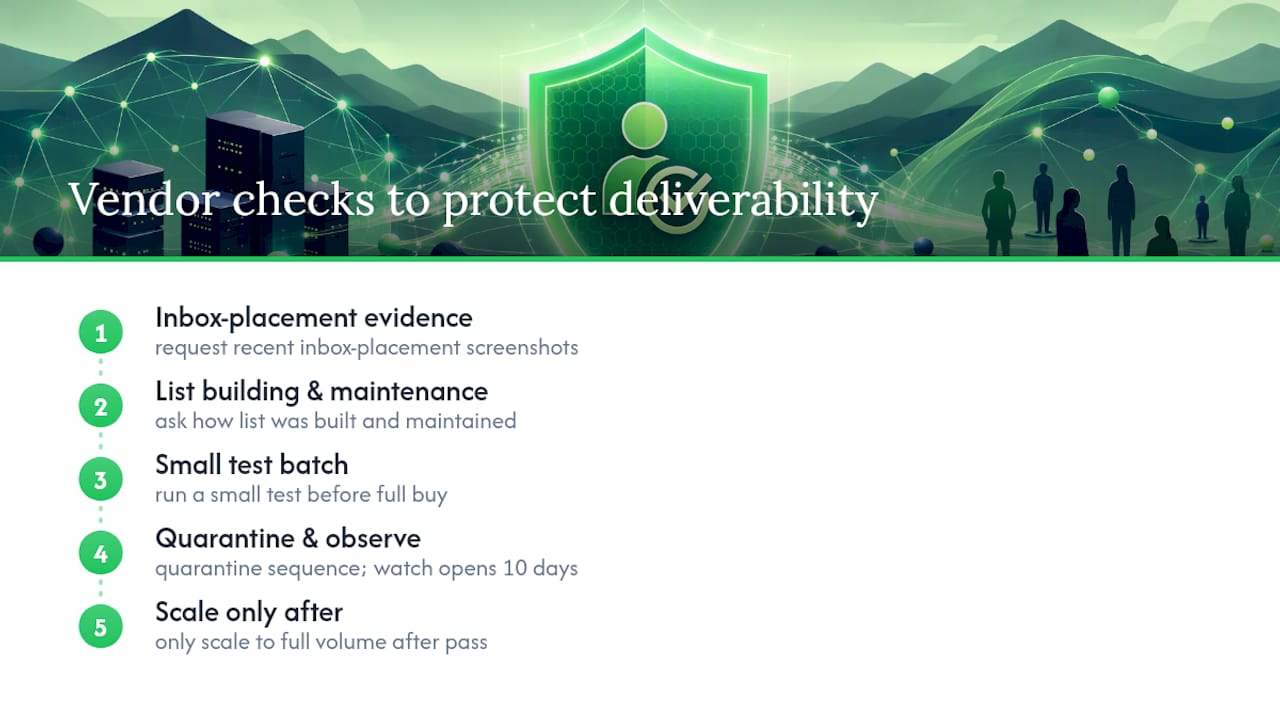
Three questions from that framework map directly to the deliverability risks covered above: ask for recent inbox-placement screenshots, ask how the vendor's list was built and how it's maintained, and ask for a small test batch before committing to full volume. A buyer who ran a test batch through a quarantine sequence, watched open rates over ten days, and only then scaled up avoided the mixing mistake entirely. Run the checklist before you spend, not after a placement problem forces you to.
Where Solo Ad Deliverability Is Headed
Inbox classifiers are only going to get more aggressive about engagement scoring, and platforms show no sign of loosening enforcement on unauthenticated or poorly segmented sending. The affiliates still getting inbox placement in this environment share three habits: they verify before they buy, they invest in subdomain and warm-up infrastructure instead of skipping it, and they scale conservatively instead of chasing volume. Test small, verify continuously, and treat every new solo-ad source as unproven until the data says otherwise.
— Philip Coble
Get the Vendor Vetting Checklist Before Your Next Buy
This approach offers a buyer-first alternative to trusting a solo-ad seller's word for it. Instead of promises about "premium" traffic, a 21-Question Vendor Vetting Framework provides a working checklist built from extensive observation of how sellers misrepresent list quality and inbox placement.
The checklist walks you through exactly what to ask before you pay, what evidence to demand (inbox-placement screenshots, click-to-opt-in ratios, list-building history), and how to structure a small test batch before committing real budget. Pair it with the quarantine and warm-up sequence covered above, and you've got a verification workflow instead of a guessing game. Visit Soloadsguide to pull the checklist and start vetting your next vendor before you spend a dollar.
Where to Go Deeper on Technical Setup
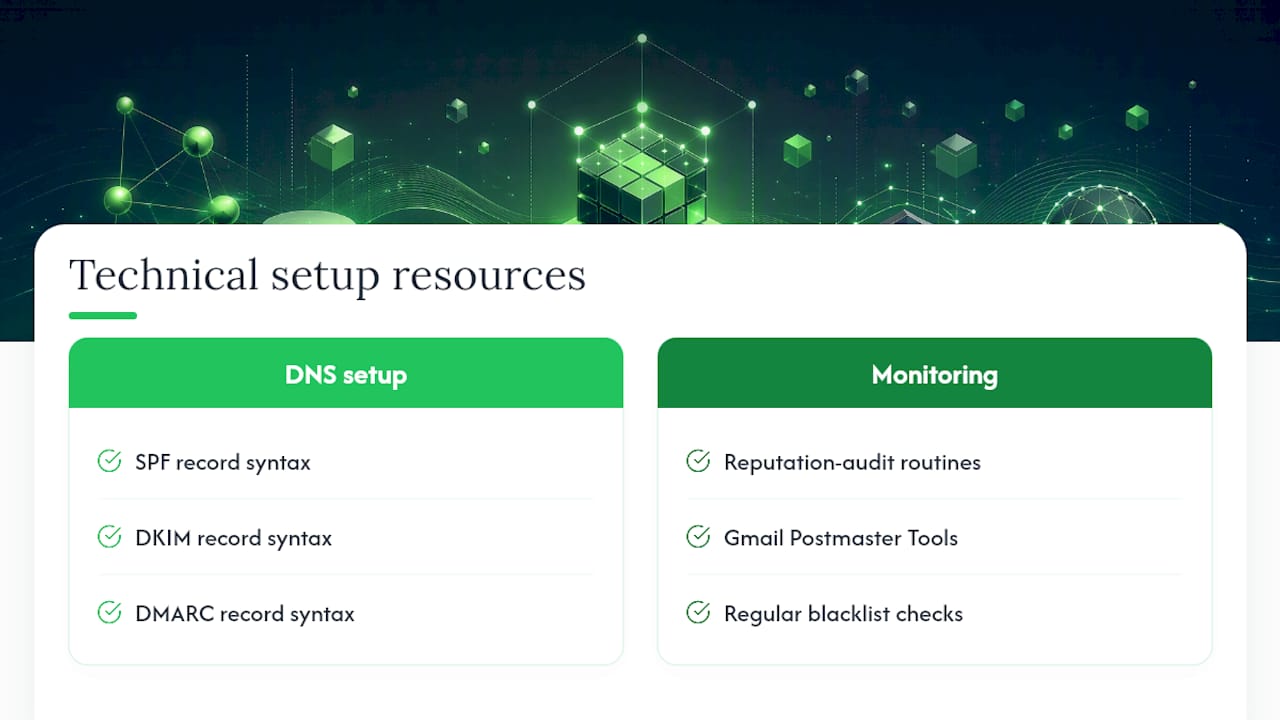
For hands-on DNS configuration, the SPF, DKIM, and DMARC setup guide walks through record syntax step by step. For monitoring infrastructure, technical deliverability monitoring guidance covers reputation-audit routines worth adopting alongside Gmail Postmaster Tools and regular blacklist checks.
Sources
- The Complete Email Deliverability Checklist for 2026 (+Tools & Tips) | WordStream
- How to improve email deliverability (The Inbox Ledger)
- Solo Ad Networks Are Bleeding Out as AI-Filtered Inboxes Strangle Affiliate EPCs – Affiliate Times
FAQ
Are solo ads worth it for building a list?
Solo ads can work, but only when the traffic is verified and quarantined before it touches your main list. Buyers who skip vetting and dump unverified leads into an established list risk the entire list's inbox placement, which is why frameworks like Soloadsguide's 21-Question Vendor Vetting Framework exist.
What is the 80/20 rule for email marketing?
The common version says roughly 80% of your engagement and results come from about 20% of your list, usually your most active subscribers. Applied to deliverability, it means protecting and nurturing that responsive core matters more than chasing raw list size.
Do people really see thousands of ads a day?
Estimates on daily ad exposure vary widely across sources and aren't consistently sourced, so no single figure holds up as definitive. What's clear from inbox behavior is that attention is scarce, which is exactly why subject-line honesty and reply-worthy content matter more than volume.
How do I know if my solo ad emails are landing in the inbox?
Run a seed test through a service like GlockApps or Litmus before and after major sends to see actual placement across major providers. Pair that with weekly checks in Gmail Postmaster Tools to catch reputation drops before they become a full deliverability crisis.
What's the biggest solo-ad deliverability mistake affiliates make?
Mixing unverified solo-ad leads directly into an established main list without quarantining them first. One bad batch can drag down engagement metrics for a list built over years, which is why a separate warm-up sequence with strict suppression rules matters more than almost any other single practice.
Recommended
- Fake Proof Solo Ads: How to Verify Before You Buy
- Affiliate Fraud Solo Ads: A Buyer's Verification Checklist
- Protect Your Budget: 21 Question Solo Ad Red Flags for Buyers
- How to Vet Solo Ad Sellers (Before You Spend a Dollar)
Want Verified Traffic Without the Guesswork?
PulseTraffic screens every seller, filters bot clicks in real time, and shows you verified buyer traffic labels before you spend a dollar.