
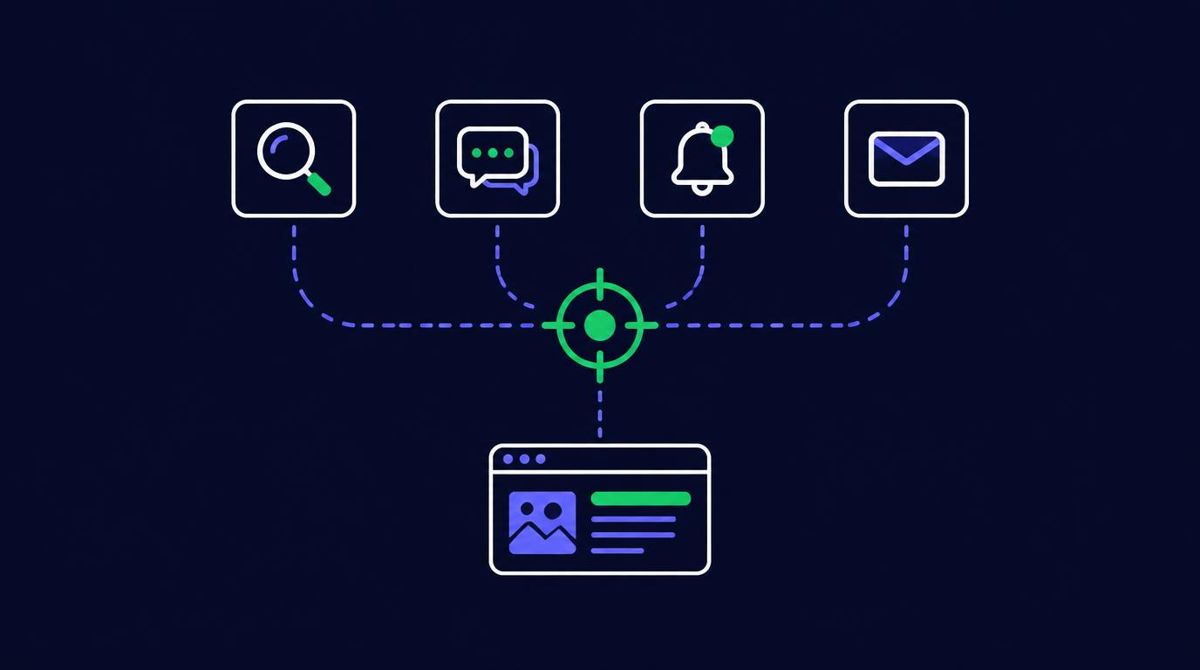
The best platforms to buy targeted website traffic fall into four groups: search and social ad networks, native and push networks, solo ad marketplaces, and direct solo ad vendors. Each targets people differently. Search targets intent, social targets interests, native and push target placements, and solo ads target an email list's subject. Choose by your goal and budget.
No single platform is best for everyone. A local plumber, a SaaS trial, and an affiliate opt-in page need different kinds of visitors. This guide walks through each category, what it does well, where it tends to disappoint, and how to pick one for your goal.
What does "targeted website traffic" actually mean?
Targeted traffic means visitors chosen because they match something specific: what they searched for, what they are interested in, where they live, or which email list they joined. The opposite is untargeted traffic, where a seller simply sends a volume of visits to your page with no filter beyond price.
When you buy targeted website traffic, you are paying for the targeting, not just the visit. That is why the price per click varies so much between platforms. A click from someone who searched for your exact product usually costs more than a click from a broad placement, and it usually converts better too.
A useful rule: the more specific the targeting, the more you should expect to pay, and the more you should demand proof that the targeting was applied.
Are search and social ad networks the best place to start?
For many businesses, yes. Google Ads and Microsoft Advertising let you target people by the words they search. Meta, TikTok, LinkedIn, and similar platforms let you target by interests, demographics, and behavior.
Pros
- Fine control over audience, location, device, and schedule.
- Detailed reporting and conversion tracking inside the platform.
- You can start small and stop at any time.
- Search traffic arrives with clear intent.
Cons
- Competitive keywords and audiences can be expensive.
- There is a learning curve, and setup mistakes waste money fast.
- Ad policies are strict, and some offers, including many make money online offers, are restricted or rejected.
- Accounts can be suspended, sometimes with little explanation.
Search and social suit businesses with a compliant offer, a clear customer, and time to test. Our guide to strategies for increasing traffic through advertising covers how to structure those campaigns.
When do native and push networks make sense?
Native ad networks place sponsored content in article feeds and "recommended for you" widgets on publisher sites. Push networks send browser notifications to people who opted in to receive them from a site.
Pros
- Lower cost per click than most search and social platforms.
- Large reach, useful for content, news style offers, and broad consumer products.
- Often more permissive about offer types.
Cons
- Traffic quality varies widely by placement and by network.
- Some placements produce accidental clicks or low attention visits.
- You usually need to build placement blocklists and whitelists before results improve.
- Bot and fraud exposure is higher on some smaller networks.
Native and push work best for marketers comfortable with testing many placements and cutting the weak ones quickly. They are rarely a good first choice for a beginner with a small budget.
What about solo ad marketplaces?
A solo ad marketplace connects buyers with many independent list owners. You pick a seller, buy a set number of clicks, and the seller emails their list with your link. Udimi is the best known example. Our explainer on solo ad marketplaces and the Udimi buyer's guide go deeper.
Pros
- Many sellers in one place, with ratings and past buyer reviews.
- Simple ordering, priced per click.
- A dispute or support process run by the marketplace.
- Good for list building in niches like online business and personal development.
Cons
- Quality varies a lot from seller to seller.
- Ratings can be gamed, so they are a starting point, not proof.
- Targeting is limited to the theme of each seller's list.
- You still need your own tracking to confirm what was delivered.
Should you buy from direct solo ad vendors?
Direct vendors are list owners or traffic services you buy from outside a marketplace, usually through their own website. Some run one list. Others manage traffic from several sources.
Pros
- You can build a working relationship and get consistent results from a vendor you trust.
- Prices and packages can be more flexible.
- Some vendors offer extra filtering or reporting.
Cons
- No marketplace standing between you and the vendor if something goes wrong.
- Refund and replacement terms differ from vendor to vendor, so read them first.
- Claims about list size or buyer rates are hard to verify before you pay.
Run any direct vendor through a proper vetting process before a large order. The 21-question vendor vetting framework gives you a structured way to do it, and the reliable solo ads provider checklist covers what good sellers tend to have in common.
Disclosure: I own PulseTraffic, which is a direct solo ads traffic service. Treat this mention as coming from the owner, not an independent reviewer, and vet it the same way you would vet anyone else. See PulseTraffic packages
How do you choose a platform by goal?
Start from what you need the visitor to do, then match the category to that action.
| Your goal | Categories to test first | Why |
|---|---|---|
| Sales from people ready to buy | Search ads | Visitors arrive with stated intent |
| Awareness for a consumer product | Social, native | Broad reach and visual formats |
| Low cost reach for content offers | Native, push | Lower click prices, more volume |
| Email list growth in online business niches | Solo ad marketplaces, direct vendors | Subscribers already read similar emails |
| Local customers | Search ads, local social targeting | Strong location controls |
Then apply three filters before you commit real money:
- Policy fit. Will the platform accept your offer and landing page?
- Budget fit. Can you afford enough clicks to learn something? A test that is too small tells you nothing.
- Measurement fit. Can you track every visit independently, with your own tracking link and UTM tags? If not, you cannot judge the result.
What mistakes do buyers make when choosing a platform?
The most common mistake is choosing on price per click alone. A cheaper click that never converts costs more than an expensive one that does. The second is spreading a small budget across too many platforms at once, so no single test gets enough clicks to mean anything.
Other mistakes worth avoiding:
- Sending paid traffic to a page that has not been tested with any traffic yet.
- Trusting the platform's own reporting without an independent check.
- Scaling after one good day instead of several consistent results.
- Ignoring the platform's ad policies and losing the account after spending on setup.
How should you test a new traffic platform?
Treat the first order on any platform as a measurement exercise, not a growth plan.
- Send traffic to one page with one clear action.
- Tag every link so your analytics can tell sources apart. Our guide to tools for tracking traffic performance explains what to set up.
- Use your own click tracker so you can compare delivered clicks with what you were charged.
- Decide in advance what result counts as a pass.
- Compare cost per subscriber or cost per sale across platforms, not cost per click.
If you are testing solo ads specifically, the small test buy approach and the full walkthrough on how to buy solo ads traffic show what to check on each order.
If cheap clicks are tempting you, read whether cheap traffic can be high quality first. Low prices often hide bot traffic, and traffic bots and free traffic generators are a category to avoid entirely.
Want Verified Traffic Without the Guesswork?
PulseTraffic screens every seller, filters bot clicks in real time, and shows you verified buyer traffic labels before you spend a dollar.
