
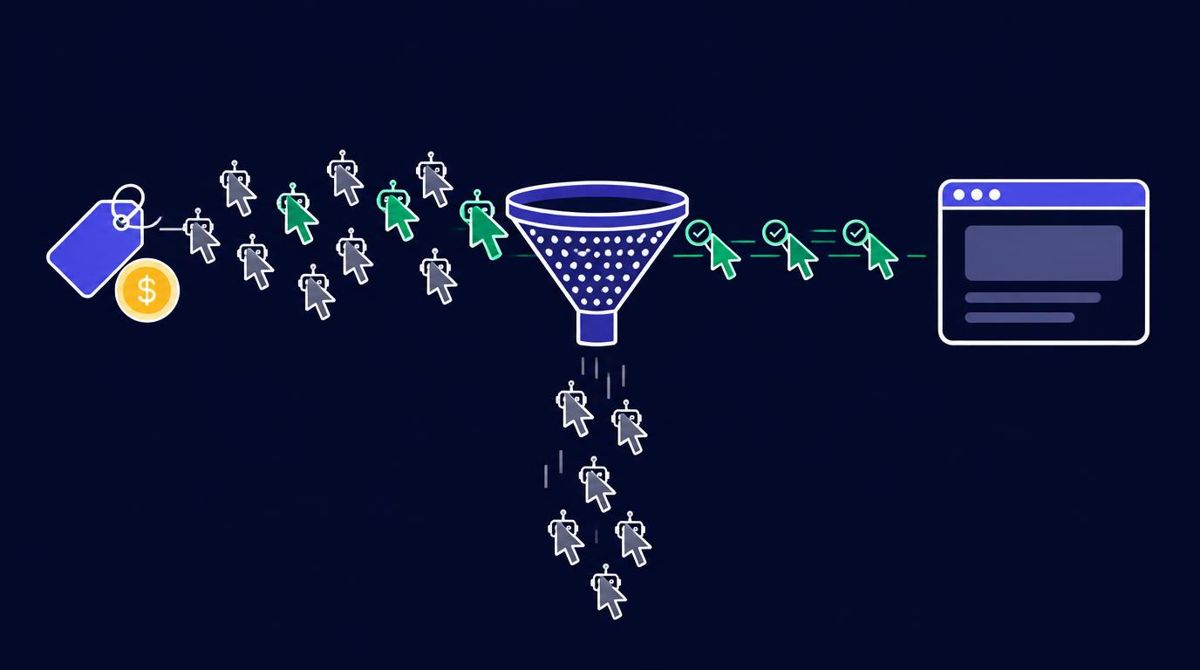
Cheap website traffic can be high quality, but bulk traffic sold at a very low price usually is not. When a seller offers thousands of visits for a few dollars, the numbers rarely add up for real people. Treat any low cost source as unproven, test it small, and judge it by engagement and conversions.
"Cheap" is relative. A low cost per click on a native network or a well priced solo ad can be a bargain. A package promising 50,000 visitors for the price of lunch is a different thing. This guide explains why, how to test a source without risking much, and which numbers tell you whether you are getting real visitors.
Why is bulk cheap traffic usually bots?
Real human attention costs money to produce. Someone has to own an audience, an ad slot, or an email list, and that audience has to be persuaded to click. Every legitimate traffic source has those costs built in.
When a price is far below what search, social, native, or email traffic normally costs, the seller has to be cutting a corner somewhere. Common ones include:
- Automated visits. Scripts or headless browsers load your page so the visit count looks right.
- Pop-under and forced redirects. Visitors land on your page without choosing to, then leave immediately.
- Incentivized clicks. People are paid small rewards to click, with no interest in what is on the page.
- Recycled or resold traffic. The same low quality visits are sold to many buyers.
None of this produces customers or subscribers. It produces numbers in a report. Our guide on traffic bots and free traffic generators explains the mechanics in more detail.
Is a low price always a warning sign?
No. Some sources are inexpensive for legitimate reasons:
- Less competitive audiences. Some countries and niches have lower ad prices.
- Broad placements. Native and push placements often cost less per click because attention per visit is lower.
- Newer sellers. A new solo ad seller may price lower to win early buyers.
- Off-peak timing. Some platforms cost less at certain hours or days.
The difference is that legitimate cheap traffic still behaves like people. Visitors scroll, read, click, and sometimes convert. The question is never just "is it cheap?" but "does the traffic behave like real visitors at this price?"
How can you test a traffic source with a small budget?
Set the test up so it gives you a clear answer, then stop and look at the data before spending more.
- Pick one page and one action. An opt-in page or a simple sales page works well. Remove distractions.
- Use your own tracking link. Route the traffic through a click tracker you control rather than trusting the seller's report. Why tracking links matter covers the reasons.
- Tag the link with UTM parameters. This keeps the source visible in Google Analytics instead of hiding it inside direct traffic. See how to track direct website traffic for the details.
- Buy the smallest order that can tell you something. For email traffic, a test of around 100 to 200 clicks is a common starting point. Our guide to the 100 to 200 click test explains the reasoning.
- Write down your pass mark first. For example, a minimum opt-in rate or a maximum cost per subscriber.
- Compare against a known source. If you have traffic you already trust, use it as the benchmark.
If the test fails, you have lost a small amount and learned something. If it passes, scale gradually and keep measuring.
Which metrics separate real visitors from junk?
No single number proves traffic is real. Look at several together.
| Metric | What real visitors tend to show | What junk traffic tends to show |
|---|---|---|
| Unique vs raw clicks | Small gap | Large gap from repeated hits |
| Engagement time | A spread of short and long visits | Nearly all visits of a few seconds |
| Scroll and click activity | Some scrolling and on-page clicks | Almost none |
| Geography | Matches what you ordered | Unexpected countries or one data center region |
| Timing | Visits spread over hours | Large bursts in a few minutes |
| Device and browser mix | Varied, realistic | Identical user agents or outdated browsers |
| Conversions | At least some opt-ins or sales | None, or fake looking sign-ups |
GA4 shows engagement time, engaged sessions, and geography. A click tracker shows raw and unique clicks, IP data, and timing. The guide to tracking tools explains how they fit together, and vendor traffic source quality indicators lists more signals to watch.
What about fake sign-ups?
Some low quality sources do produce conversions, just not real ones. Watch for:
- Email addresses that bounce or look randomly generated.
- Many sign-ups from the same IP range.
- Subscribers who never open a single follow-up email.
Double opt-in and an email verification step help filter these out. If a large share of new subscribers never confirm or never open, treat the source as suspect even if the opt-in rate looked good.
How does this apply to solo ads?
Solo ads sit in the middle of the price range. They are rarely the cheapest clicks available, but they are not the most expensive either. Quality varies by seller, so the same testing rules apply.
Before you buy, ask the seller where their traffic comes from, what filtering they apply, and what happens if a share of clicks turns out to be invalid. The 21-question vendor vetting framework covers these questions in order. When you are ready, the buy solo ads traffic guide walks through the full process.
Disclosure: I own PulseTraffic, a solo ads traffic service. That makes me biased, so test it like any other source and judge it on your own numbers. See PulseTraffic packages
What questions should you ask a cheap traffic seller?
Before you pay, ask a few direct questions and pay attention to how specific the answers are.
- Where exactly does the traffic come from: an email list, ad placements, or something else?
- Which countries and devices will the clicks come from?
- Do you filter bots and duplicate clicks, and how?
- Can I use my own tracking link?
- What happens if part of the delivery turns out to be invalid?
Vague answers, refusal to accept outside tracking, or promises of huge volume with no detail about the source are all reasons to walk away. A good seller usually has no trouble explaining where it comes from.
It also helps to look the seller up outside their own website. Search their name alongside words like review, refund, or complaint, and look for buyers describing specific results rather than generic praise. A short history is not a dealbreaker, but a pattern of unresolved complaints about bot clicks or missing deliveries should end the conversation before you spend anything.
When is cheap traffic worth it?
Cheap traffic is worth it when it passes a fair test: real engagement, conversions that hold up, and a cost per result you can live with. It is not worth it when the only thing it improves is a visitor count.
A good mindset is to stop thinking about cost per visit and start thinking about cost per useful result. A source that costs twice as much per click but produces three times the subscribers is the cheaper one. If you are still deciding where to look, our overview of the best platforms to buy targeted website traffic compares the main options.
Want Verified Traffic Without the Guesswork?
PulseTraffic screens every seller, filters bot clicks in real time, and shows you verified buyer traffic labels before you spend a dollar.
