
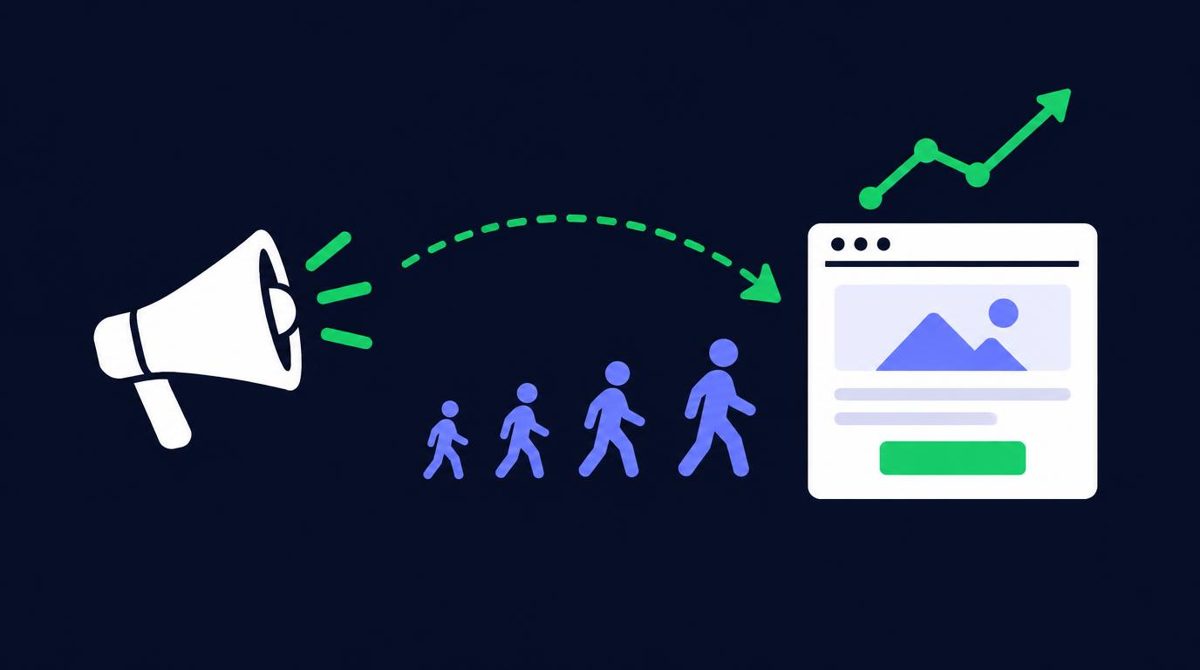
The best way to increase traffic through advertising is to pick one ad channel that matches your goal, send clicks to a page built for that audience, track every click independently, and scale only what your own numbers prove. Small tests, clear targeting, strong landing pages, and retargeting do more than a bigger budget.
Advertising can bring visitors faster than almost any other method, but it can also burn money faster. This guide starts with what ad traffic actually is, then covers the strategies that consistently make paid traffic worth what you pay for it.
What is ad traffic?
Ad traffic is any website visit that comes from a paid placement. Someone saw an ad you paid for, clicked it, and landed on your page. That includes search ads, social ads, display banners, native ads, video ads, and paid email placements such as solo ads.
The key feature of ad traffic is that you control when it starts and stops, and roughly who sees it. You pay by the click, by the thousand impressions, or by the result, depending on the platform.
Ad traffic differs from organic traffic, which arrives without paying for the placement, and from referral traffic, which comes from other sites linking to you. It is usually colder than both, since many visitors have never heard of you. That is why what happens after the click matters so much. For related definitions, see what is affiliate marketing traffic and what is performance marketing.
How do you choose the right ad channel?
Choose the channel where your audience already is and where the intent matches your offer.
- Search ads reach people actively looking for something. Good for direct sales and high intent.
- Social ads reach people by interest. Good for awareness and lead generation.
- Native and display ads reach readers on content sites. Good for volume, often lower intent.
- Email traffic such as solo ads reaches subscribers of someone else's list. Good for fast list building in niches where those lists exist.
Start with one channel. Spreading a small budget across five platforms gives you too little data on each to make decisions. See solo ads vs Facebook ads vs Google ads for a side by side view.
Why should you start with small, measured tests?
Small tests limit what a bad result costs you and give you real data quickly.
A sound test:
- Set a capped budget you are comfortable losing.
- Define success in advance, such as a target cost per subscriber.
- Run long enough to get meaningful numbers, but not so long that a losing ad drains your budget.
- Change one thing at a time so you know what made the difference.
For email traffic, a 100 to 200 click test is a practical starting size.
How do targeting and ad copy affect traffic quality?
Tighter targeting and honest copy bring fewer wasted clicks. The goal is not the most clicks but the right ones.
- Target narrowly at first. Broad targeting brings cheap clicks that rarely convert.
- Write copy that matches the page. If the ad promises a checklist, the page should deliver a checklist. Mismatched promises raise bounce rates.
- Pre-qualify in the ad. Saying who the offer is for, and who it is not for, filters out people who would never convert.
- Control frequency. Showing the same ad too often wears out an audience. See why ad frequency affects conversions.
Our guide on what ad copy means in marketing covers copy basics.
Why does the landing page matter as much as the ad?
The ad only earns the click. The landing page decides whether that click becomes a subscriber or sale.
A page built for ad traffic should have one clear goal, a headline that matches the ad, minimal distractions, and a fast load time on mobile. For cold traffic, capturing an email first usually works better than sending visitors straight to a sales page, because it gives you more chances to convert them later.
See the role of the landing page in solo ad campaigns and the role of the call to action in lead capture.
How does retargeting increase traffic from ads?
Retargeting shows ads to people who already visited your site. It brings back visitors who were interested but did not act the first time.
Because these visitors already know you, retargeting often costs less per result than reaching cold audiences. It works well alongside any first-touch channel, including email traffic. See retargeting solo ad traffic for a step by step plan.
How do you track ad traffic and protect your budget?
Track every paid click with tools you control, and compare the platform's numbers against your own.
- Use GA4 for on-site behavior and conversions.
- Use an independent click tracker for raw versus unique clicks, bots, and geo.
- Tag every campaign with UTM parameters so you can tell sources apart.
- Review cost per subscriber and cost per sale, not just cost per click.
Ad platforms and vendors report their own view of delivery. Independent tracking lets you confirm it. See click fraud prevention and why ad spend audits improve results.
What advertising mistakes reduce traffic quality?
Most wasted ad spend comes from a few repeat mistakes.
- Optimizing for the cheapest click. Low cost per click often means low intent or poor quality traffic. Judge on cost per subscriber or sale.
- Sending every visitor to the same page. Visitors from search, social, and email arrive with different expectations. Match the page to the source.
- Trusting only the platform's dashboard. Compare it with GA4 and your own tracker.
- Scaling too early. One good day is not a trend. Wait for consistent results across tests.
- Ignoring the offer fit. Even well targeted ads fail if the offer does not suit the audience. See offer-to-list mismatch.
Fixing these usually improves results more than finding a new ad platform. It also pairs well with the broader channel mix in traffic builder strategies to increase website visitors.
When should you scale ad spend?
Scale when a channel has delivered a profitable or acceptable cost per result across more than one test. Increase budget gradually, because performance often changes as you reach a wider audience. Keep a second channel in testing so you are not dependent on one.
Where does PulseTraffic fit?
Disclosure: I own PulseTraffic. It is the solo ads traffic service I run, so read this as the owner's description and vet it like any other source. PulseTraffic is one option for paid email traffic aimed at list building in the make money online and business niches, and orders accept your own tracking link.
For the full process of buying email ad traffic, see buy solo ads traffic.
Want Verified Traffic Without the Guesswork?
PulseTraffic screens every seller, filters bot clicks in real time, and shows you verified buyer traffic labels before you spend a dollar.
