
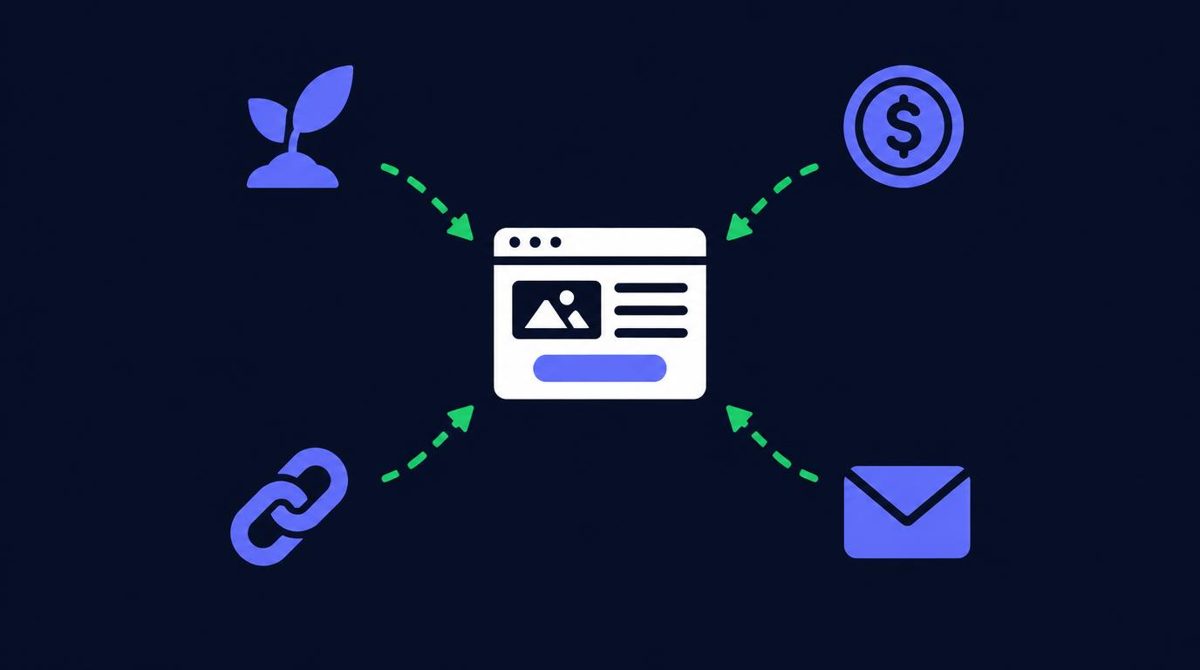
Traffic builders increase website visitors through four main channel types: organic (search and content), paid (ads and bought traffic), referral (other sites, partners, and affiliates sending visitors), and owned (your email list and audience). Most lasting growth combines at least two, using paid traffic for speed and organic and owned channels for long-term stability.
Each channel has a different cost, speed, and risk. This guide explains what each one involves, how traffic builders use it, and, honestly, where solo ads fit and where they do not.
What are organic traffic strategies?
Organic traffic comes from people finding you without a paid placement, mainly through search engines and content platforms.
The main organic strategies are:
- Search engine optimization. Writing pages that answer the questions your audience types into Google, with clear titles, useful structure, and internal links.
- Content publishing. Regular articles, guides, and resources that build a library of pages that can rank.
- Video and social content. YouTube, short video, and posts on platforms where your audience spends time.
- Community participation. Helping people in forums and groups, where useful answers bring visitors back to your site.
Organic traffic costs little in cash but a lot in time. Results usually build over months, and they can drop when search algorithms change. The upside is that good pages can keep bringing visitors for a long time without ongoing spend.
What are paid traffic strategies?
Paid traffic means paying a platform or vendor to send visitors. You trade money for speed and control.
Common paid strategies include:
- Search ads, which show your ad to people searching for specific terms.
- Social ads, targeted by interests and demographics.
- Native and display ads, placed on content sites.
- Email traffic, including solo ads and newsletter sponsorships.
- Retargeting, which shows ads to people who already visited your site.
Paid traffic can start within hours and stop just as fast. The risk is paying for clicks that do not convert or are not real. That is why serious buyers track every paid source independently. Our affiliate traffic source comparison and top affiliate traffic channels compare the options in more depth.
What are referral traffic strategies?
Referral traffic comes from other websites and people linking to you. It borrows trust from someone else's audience.
Traffic builders use referral strategies such as:
- Guest posts and interviews on sites your audience already reads.
- Partnerships and joint ventures, where two businesses promote each other.
- Affiliate programs, where partners earn a commission for sending buyers.
- Directory and resource listings relevant to your niche.
Referral visitors often arrive warmer than cold paid traffic because someone they trust pointed them to you. The trade-off is that you depend on partners, and building those relationships takes time.
What are owned traffic strategies?
Owned traffic comes from audiences you control directly, mainly your email list, plus things like a community or SMS list.
Owned channels are valuable because no platform can take them away or change the price overnight. A traffic builder who grows an email list can send visitors back to new content and offers whenever they choose.
The main owned strategies are:
- Email newsletters and sequences that bring subscribers back to your site.
- Lead magnets that turn one-time visitors into subscribers. See types of lead magnets.
- List hygiene and segmentation, so you keep reaching engaged readers. See email list hygiene and email segmentation.
Many traffic builders use paid and organic channels mainly to feed their owned list. That is where the long-term value sits. See why building an email list matters.
Where do solo ads fit, and where don't they?
Solo ads are a paid email traffic channel, and they are good at one specific job: sending visitors to an opt-in page quickly, in niches where solo ad lists exist. They are not a complete traffic strategy.
Solo ads fit well when:
- You are building an email list in make money online, affiliate marketing, or business opportunity niches.
- You want to test a squeeze page or lead magnet with real visitors in days.
- You have a follow-up sequence ready, because most value comes after the opt-in.
Solo ads are a poor fit when:
- Your business is local or sells to a niche that solo ad lists do not cover.
- You want long-term, low-cost traffic. Solo ads stop the moment you stop paying.
- You plan to send visitors straight to a sales page with no list building step.
- You are not prepared to track orders yourself, since list quality varies widely between vendors.
An honest view is that solo ads work best as one part of a mix: a fast way to grow an owned list, alongside organic content that builds over time. Are solo ads worth it covers the trade-offs in more depth.
How do traffic builders combine these channels?
The most stable approach uses paid traffic for speed, organic for long-term reach, referral for trust, and owned channels to keep the visitors you already earned.
A practical sequence for a new site:
- Set up a lead magnet and email sequence so every channel can feed your list.
- Use a small paid test to see whether your page converts.
- Publish content that answers your audience's questions, building organic traffic over time.
- Look for one or two partners who reach the same audience.
- Review each channel monthly on cost per subscriber and engagement, and move budget toward what works.
Avoid depending on a single channel. See diversify affiliate traffic sources.
How do you measure which traffic strategy is working?
Measure each channel on what it produces, not on raw visitor counts. A channel that brings fewer visitors who subscribe and buy is worth more than one that brings many who leave.
Useful measures for every channel:
- Engaged visits, from GA4, rather than total sessions.
- Opt-in rate on your landing pages, by source.
- Cost per subscriber for paid channels, using your own tracker's unique clicks.
- Email engagement from each source in the first week, which shows whether new subscribers actually read.
Tag every link you control with UTM parameters so GA4 can separate sources. Our guide to the best tools for tracking traffic performance explains which tools answer which questions.
Where does PulseTraffic fit?
Disclosure: I own PulseTraffic. It is the solo ads traffic service I run, so treat this as the owner's description. PulseTraffic covers the paid email traffic channel described above, for list building in the make money online and business niches, and orders accept your own tracking link. It does not replace organic, referral, or owned channels.
If solo ads suit your goal, our guide to buying solo ads traffic explains how to buy and check them.
Want Verified Traffic Without the Guesswork?
PulseTraffic screens every seller, filters bot clicks in real time, and shows you verified buyer traffic labels before you spend a dollar.
