
A solo ad marketplace is a platform that connects advertisers with email list owners who send paid promotional emails to their subscribers on the advertiser's behalf. The advertiser pays for a set number of clicks, the list owner sends a dedicated email, and the traffic lands on the advertiser's squeeze page or funnel. This model sits apart from Facebook Ads or Google Ads because you are buying direct access to a warm, niche email audience rather than bidding on ad placements. Solo ad marketplaces are most popular in affiliate marketing, make money online, health, and business opportunity niches. Soloadsguide has built its entire platform around helping marketers find verified vendors in exactly these niches.
How does the solo ad marketplace process work?
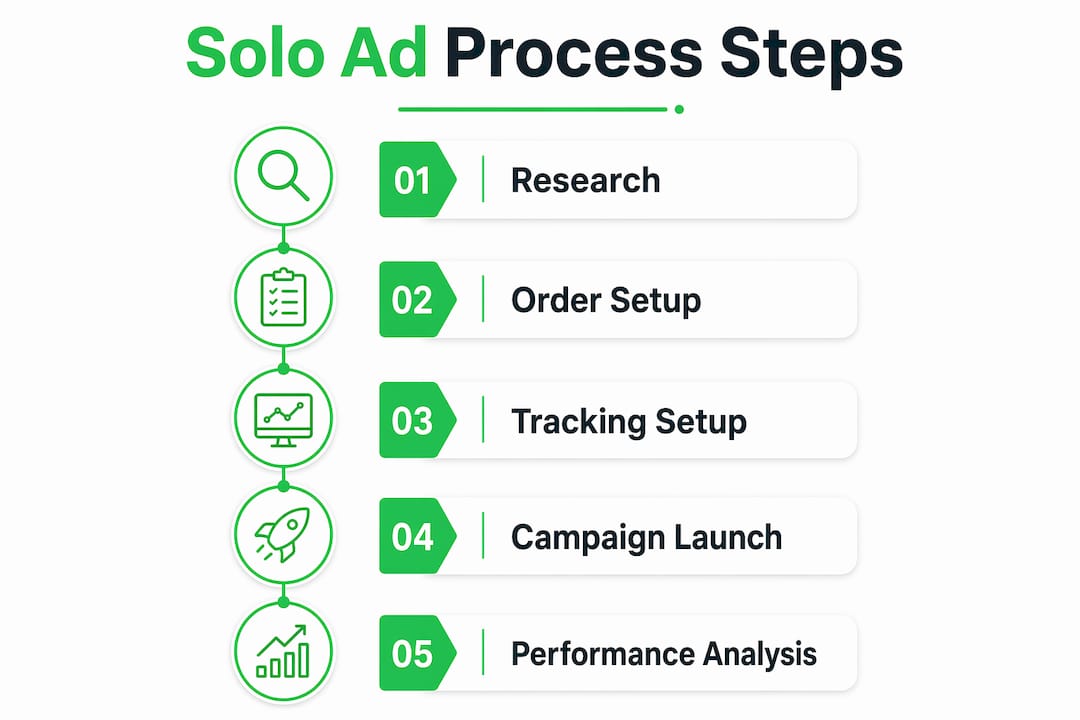
The solo ad marketplace process follows a clear sequence. Understanding each step prevents wasted budget and sets realistic expectations from the start.
- Find a vendor. Browse the marketplace and filter by niche, traffic tier, and seller ratings. Look for vendors with verified sales history and recent buyer reviews that mention opt-in rates.
- Review the vendor's list. Ask about list demographics, primary traffic countries, and how often they mail. Premium Tier-1 traffic from the US, UK, Canada, Australia, and New Zealand commands higher prices but converts better for English-language offers.
- Submit your funnel and email copy. Most vendors require you to share your squeeze page URL and an email swipe for approval. The vendor checks that your offer fits their list before agreeing to send.
- Choose your package size. Packages are priced per click, typically starting at 100 clicks for new buyers. Solo ad traffic costs between $0.30 and $1.00 per unique click in 2026, with Tier-1 lists at the higher end of that range. That price range means a 200-click test costs $60–$200, which is a low-stakes entry point.
- Track delivery. Once the vendor sends the email, clicks arrive within 24–72 hours. Use an external click tracker to verify the count and traffic quality independently of the vendor's own reporting.
- Analyze and decide. Review your opt-in rate, cost per lead, and subscriber engagement before ordering again or scaling up.
Pro Tip: Set up your tracking link before you submit the order. If you add tracking after the campaign starts, you will miss early clicks and skew your data.
Solo ads launch in as little as 24 hours, which makes them one of the fastest traffic sources available for testing a new funnel or offer. That speed advantage is real and consistent across the marketplace model.

What are the costs, quality factors, and pricing models?
Cost per click is the standard pricing unit across solo ad marketplaces. The price you pay reflects the quality and geographic makeup of the list.
Traffic quality tiers
Tier-1 traffic (US, UK, Canada, Australia, New Zealand) costs more because subscribers in these countries have higher purchasing power and respond better to English-language marketing offers. Tier-2 and Tier-3 traffic from other regions costs less per click but typically delivers lower opt-in rates and weaker buyer intent.
What to watch for in pricing
- Opt-in rate benchmarks: Well-optimized squeeze pages targeting make money online offers achieve opt-in rates between 35% and 45%. If your opt-in rate falls below 25%, the problem is usually your landing page, not the traffic.
- Bot traffic risk: Unregulated marketplaces carry a real risk of fraudulent clicks. Professional external tracking tools identify bot-heavy traffic that vendor dashboards often miss entirely.
- Vendor ratings: Marketplaces with a public rating system give you a fast filter. Sellers with consistent 4-star or higher ratings and recent verified sales are the safest starting point.
- Test before scaling: Vetting vendors through test orders is the single most reliable way to separate quality traffic from cheap, low-engagement clicks.
Solo ads vs. other paid channels
Solo ad CPC sits between $0.30 and $1.00. For list building specifically, this compares favorably to Google Ads vs. Facebook Ads, where cost per lead in competitive niches can run significantly higher and platform policy changes can pause campaigns without warning. Solo ads carry no platform ban risk and no auction volatility.
The core trade-off is control. Paid social gives you granular demographic targeting. Solo ads give you speed and simplicity, but you depend on the vendor's list quality. Knowing that trade-off upfront shapes smarter buying decisions.
What benefits do solo ad marketplaces offer?
Solo ads are fundamentally a list-building tool, not a direct sales channel. That distinction matters because it reframes how you measure success. The goal is acquiring subscribers you can nurture and monetize over time, not generating immediate purchases from cold traffic.
The core benefits are:
- Predictable pricing. You pay a fixed cost per click with no bidding wars or surprise charges. Budget planning is straightforward.
- Fast delivery. Campaigns go live within 24 hours. This speed makes solo ads ideal for testing a new squeeze page or lead magnet before committing to a larger paid campaign.
- No platform restrictions. Affiliate offers that Facebook or Google Ads might reject face no such barriers in solo ad marketplaces. Make money online, network marketing, and supplement offers all run without policy friction.
- List ownership. Every subscriber who opts in joins your list. That asset compounds over time and generates recurring income independent of future ad spend.
- Low entry barrier. Marketers with budgets between $200 and $1,500 per month can run meaningful campaigns. There is no steep learning curve for campaign setup compared to paid social platforms.
Pro Tip: Build a simple thank-you page that immediately delivers your lead magnet and includes a one-time offer. This turns your opt-in confirmation step into a revenue event that can offset your ad spend on the same day.
The role of your email list in solo ads cannot be overstated. Every click you buy is an opportunity to add a permanent subscriber to an asset you own and control.
What pitfalls should marketers avoid with solo ads?
The most common and costly mistake is treating solo ads as a direct sales tool. Most beginners expect immediate purchases from cold email traffic and declare the channel a failure when sales do not materialize. Funnel optimization must come before scaling, and the funnel's job is to capture the lead, not close the sale on the first visit.
Follow these steps to protect your budget and get reliable data:
- Start with a small test buy. Order 50–100 clicks from a new vendor before committing to larger packages. Testing 50–100 clicks initially validates list responsiveness and prevents wasted spend on a poor-quality source.
- Write custom email swipe copy. Generic swipe files underperform. Tailored email creative matched to the vendor's list demographics consistently produces higher opt-in rates.
- Use external click tracking. Install a third-party tracker like ClickMagick or a similar tool before the campaign runs. This gives you an independent click count and flags suspicious traffic patterns the vendor's dashboard will not show.
- Optimize your squeeze page first. Cold email traffic is less forgiving than warm search traffic. Run conversion rate optimization on your landing page before spending on traffic. A weak headline or slow load time kills opt-in rates regardless of traffic quality.
- Analyze before scaling. Use your first 100–200 clicks as a learning sample. Small data samples reveal funnel gaps and follow-up sequence weaknesses before you spend more.
The marketers who succeed with solo ads treat every test buy as data, not as a gamble. They ask: what did this traffic tell me about my funnel? Then they fix the answer before spending more.
Avoiding solo ad scams requires the same discipline. Vendors who refuse to share traffic source details or push you to skip the test buy are red flags worth taking seriously.
Key Takeaways
A solo ad marketplace gives marketers direct, fast, and measurable access to niche email audiences, but success depends on treating it as a list-building channel backed by disciplined testing and funnel optimization.
| Point | Details |
|---|---|
| Solo ads buy clicks, not sales | Use solo ads to build your email list, then nurture subscribers toward purchases over time. |
| Test before scaling | Start with 50–100 clicks per new vendor to validate traffic quality before committing larger budgets. |
| Tier-1 traffic costs more for a reason | US, UK, and Canadian subscribers convert better on English-language offers and justify the higher CPC. |
| Custom swipe copy outperforms generic | Write email creative tailored to the vendor's list demographics to lift opt-in rates. |
| External tracking is non-negotiable | Use a third-party click tracker to catch bot traffic that vendor dashboards routinely miss. |
Why I think most marketers misread solo ads entirely
Solo ads get a bad reputation because most people buy them the wrong way. They send cold traffic to a sales page, see no purchases, and conclude the channel does not work. That conclusion is wrong. It just means the funnel was wrong.
I have seen marketers turn a $300 test buy into a list of 150 engaged subscribers, then generate consistent revenue from that list over the following three months. The traffic cost was a one-time expense. The list was a permanent asset. That math only works if you build the funnel correctly first.
The vendor selection process matters more than most guides admit. Chasing the lowest price per click is the fastest way to fill your list with unresponsive subscribers. Marketers who use performance benchmarks to evaluate vendor results before buying consistently outperform those who sort by price alone.
My honest view: solo ads are one of the few paid traffic channels where a beginner with a $200 budget can get real, measurable data within 48 hours. That is genuinely useful. But the channel rewards patience and process. The marketers who treat each campaign as a test, study the opt-in rate data, and iterate their funnels are the ones who build durable list-based businesses. The ones who chase shortcuts burn their budgets and blame the channel.
— Phil
Soloadsguide: your next step in solo ad traffic
Soloadsguide is built specifically for affiliate marketers who want to use solo ads without guessing which vendors are worth their money.
The platform features verified Tier-1 traffic sources tested for conversion rates, along with practical guidance on vendor selection, funnel setup, and campaign management. Users have reported a 40% reduction in cost per lead after switching from unvetted vendors to the sources listed on the site. Whether you are placing your first 100-click test or scaling a proven funnel, the Solo Ads Guide gives you the vendor data and campaign frameworks to spend with confidence. Start with the vetted vendor list and apply the cost per lead strategies to get the most from every dollar you invest.
FAQ
What is a solo ad marketplace?
A solo ad marketplace is a platform where advertisers pay email list owners to send a dedicated promotional email to their subscribers. The advertiser receives a set number of clicks to their squeeze page or offer.
How much do solo ads cost per click?
Solo ad traffic costs between $0.30 and $1.00 per unique click in 2026, with premium Tier-1 lists from the US, UK, and Canada at the higher end of that range.
What opt-in rate should I expect from solo ads?
Optimized squeeze pages targeting make money online niches achieve opt-in rates between 35% and 45%. Rates below 25% usually indicate a landing page issue rather than a traffic quality problem.
Are solo ads good for beginners?
Solo ads are one of the most beginner-friendly paid traffic channels because pricing is fixed, setup is fast, and campaigns launch within 24 hours. Start with a small 50–100 click test to learn before spending more.
How do I avoid bot traffic in solo ad marketplaces?
Use a professional external click tracking tool such as ClickMagick to monitor traffic independently of the vendor's dashboard. Compare your tracker's click count and engagement data against what the vendor reports to spot discrepancies.
Recommended
- Solo Ads Udimi: Buyer's Guide for Affiliate Marketers
- Solo Ads Blog, Tips, Guides & Reviews | SoloAdsGuide.com
- How to Avoid Solo Ad Scams: 2026 Buyer's Guide
- Do Solo Ads Work for Affiliate Marketers in 2026?
Want Verified Traffic Without the Guesswork?
PulseTraffic screens every seller, filters bot clicks in real time, and shows you verified buyer traffic labels before you spend a dollar.