
Some offers struggle with solo ads because of how the channel works, not because the traffic is bad. A solo ad is one email, sent to someone else's list, with one link to your page. The reader gets a few seconds of attention and no history with you. Offers that need trust, a long explanation or a high first payment are a poor fit for that moment. Before you blame a vendor, check the offer, the page and your tracking. This guide shows how to do that with a small tracked test.
TL;DR
- Solo ads favor impulse, low-ticket offers with a follow-up sequence behind them. High-ticket, trust-heavy and consultation-driven offers tend to struggle.
- Clicks without leads or sales usually come from one of four places: audience mismatch, a weak page, no follow-up, or low-quality clicks. Check them in that order.
- Opt-in rate alone proves nothing. Judge an order by qualified leads and sales per dollar spent.
- Use one tracking link per order, document what the vendor promised, and start with a small click test before you scale.
Table of Contents
- What a solo ad actually asks your offer to do
- Offers that tend to struggle with solo ads
- Why you can get clicks and still no leads or sales
- Offer problem or traffic problem? A quick decision table
- Opt-in rate is not the whole story
- How to test your offer with a small tracked order
- When solo ads fit, and when another channel may suit better
- Perspective
- Where to go next
- FAQ
- Sources
What a solo ad actually asks your offer to do
A solo ad means you rent access to another person's email list. The email promotes only your offer, and you pay per click or per subscriber reached. You never receive the list itself. You receive visitors who clicked a link in an email they were already reading.
That has three consequences for your offer.
- The visitor is cold to you. They trust the list owner, not you. Your page has to earn trust in seconds.
- The first step has to be small. Most solo ad buyers send traffic to a squeeze page (a single-purpose page that collects an email address) and sell later through follow-up emails.
- The money often arrives later. Whatever you sell on the front end has to be cheap enough to say yes to, or the follow-up has to carry the sale.
An offer that cannot work inside those three limits will look like bad traffic even when the traffic is fine.
Offers that tend to struggle with solo ads
No offer fails every time, and results vary by niche, list and page. But some patterns come up repeatedly.
High-ticket offers sold on the first click
One published review of a solo ads method reports that this kind of traffic can sometimes be persuaded to buy products at $7 to $10, while spending $20 or more is difficult. If your front-end price is several hundred dollars, the email click is too small a step to get there. Premium software, recurring memberships and high-ticket affiliate programs fall into this group when they are sent straight to a sales page.
The fix is not to give up on the offer. It is to put a step between the click and the price: an opt-in page, a short email sequence, then the offer. The solo ad buys the subscriber, and your follow-up sells the product.
Services that need trust and conversation
SEO audits, web design, coaching and anything else where the buyer wants to talk before paying ask for more trust than a single email can lend. Direct sales pages for these offers rarely convert cold clicks. If you sell a service, a free, specific lead magnet that leads to a call or a sequence is a more realistic first step than a pitch.
Offers with no back end
A $7 front-end product with no upsell, no second purchase and no follow-up sequence has to pay for the click on its own. At typical click prices that math is hard. Selling to the same subscriber again is where most of the return on a list-building campaign comes from. If you have nothing else to sell, your offer is the problem, and no vendor can fix that.
Offers that don't match the list
This is the most common mismatch. A list built around making money online responds to business opportunity offers. It does not respond to, say, a skincare product. Before ordering, ask what the list was built around and compare it with who your offer is for. The niches where solo ads are most often used are make money online, business opportunity, MLM, health and weight loss, dating and crypto education. If your offer sits far outside those, the list you need may be hard to find.
Offers that overlap with a freebie list
Lists built on free giveaways attract people who like free things. One reviewer notes that such subscribers click and move on rather than buy, and that recycled subscribers can sit on many lists at once and receive dozens of promotional emails a day. A paid offer sent to that audience can show a healthy opt-in rate and almost no purchases.
Why you can get clicks and still no leads or sales
When traffic arrives and nothing happens, the cause is usually in one of four places. Work through them in this order, because the first two cost nothing to fix.
1. The page
Check the basics before anything else: does the headline match what the email promised, is the offer clear in one read, does the form work, and does the page load properly on a phone? If 300 visitors produce only 6 signups, a 2% opt-in rate, the first place to look is the page, not the vendor. Our guide on why a solo ad opt-in rate is low walks through the diagnosis in more detail.
If the page is where people drop off, work on the page itself. Landing page optimization strategies can help you find where leads stop moving toward a purchase.
2. The lead magnet and follow-up
If people opt in at a good rate and then never buy, the problem is further down. A 35% opt-in rate with no later purchases usually means one of three things. The lead magnet attracts information seekers, the follow-up emails don't connect to the reason people subscribed, or the offer doesn't solve a problem the audience values enough to pay for.
Solo ad traffic arrives cold. It needs a sequence that tells a story, builds the connection and then makes the offer. Without that sequence, even real, well-matched traffic can look like a failure.
3. The audience
If the page and follow-up are sound, the list may simply not fit. Ask the vendor how the list was built and what its subscribers originally signed up for. Compare the answer with your buyer. A list full of people who wanted something different from what you sell will not convert, however clean the clicks are.
4. The clicks themselves
Only after the first three should you suspect low-quality traffic. GetResponse warns that some lists are built with scraping software or filled with bots that open and click but never convert. A bot-filled list can make you blame your squeeze page or offer when the list was the issue.
Signs worth looking at include visitors from countries you did not order, unusually repetitive behavior, and sessions too short for a page to load. Treat them as signals, not proof. Short visits can also come from privacy tools and measurement limits, and an unsuitable offer or a tracking failure can produce the same picture. For a deeper look, see our guide to bot traffic in solo ads and the one on VPN traffic.
Offer problem or traffic problem? A quick decision table
| What you see | Most likely cause | What to do first |
|---|---|---|
| Clicks recorded, very few opt-ins | Page, headline mismatch or broken form | Test the page on mobile and desktop, match the headline to the email |
| Good opt-in rate, few email clicks | Lead relevance or weak follow-up | Rewrite the first emails around why people subscribed |
| Good opt-in rate, no sales | Offer too expensive or no back end | Lower the first price or add a second offer |
| Clicks far below what was promised | Tracking failure or under-delivery | Check your link in a private browser, compare against your click log |
| Wrong countries, repetitive visits | Low-quality clicks | Compare with your click logs and the order terms you saved |
The table is a starting point. Several of these can happen at once, which is why you change one thing at a time.
Opt-in rate is not the whole story
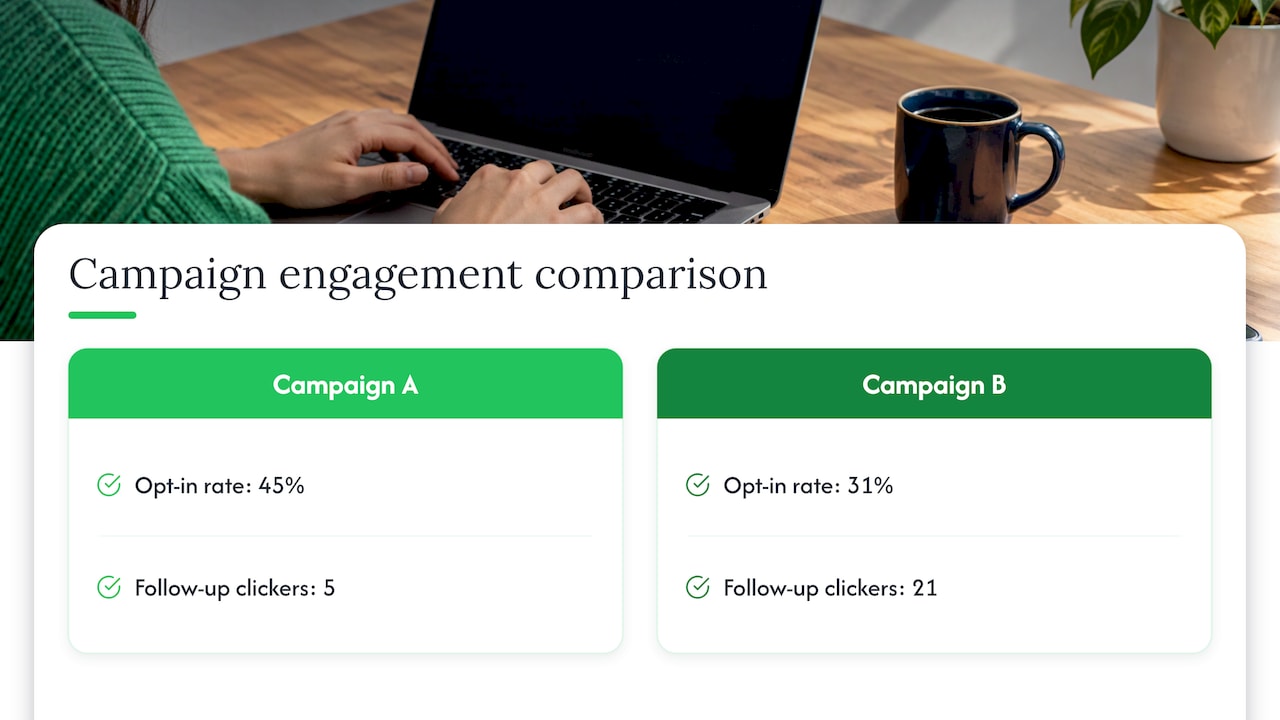
A high opt-in rate feels like proof that the traffic is good. It is only proof that people typed in an email address. A published comparison shows why: one campaign had a 45% opt-in rate and 5 follow-up clickers, while another had a 31% opt-in rate and 21 follow-up clickers. The lower opt-in rate produced the more engaged list.
Cost per lead matters more than cost per click. A traffic-quality guide gives a worked example: Vendor A at 84% unique clicks and 8% flagged produced leads at $3.28 each, while Vendor B at 65% unique and 25% flagged cost $10.53 per lead. The same guide notes that a flag comes from the visitor's address and is a signal, not proof.
The same logic applies to price. In another illustration, a $240 order with 15 qualified leads ($16 each) beats a $200 order with 8 ($25 each) even though the cheaper order had the lower price per click. Decide your acceptable cost per lead or sale from your own numbers before you buy, since no single conversion rate works as a universal benchmark.
How to test your offer with a small tracked order
The point of a first order is to learn, not to profit. Keep it small and keep everything else stable.
- Write down the terms before you pay. Record the quantity, the geography, the delivery period and what counts as a billable click. Documenting these before buying lets you compare orders later.
- Build one tracking link per order. A separate link for each purchase lets you attribute results to a single vendor and a single order. Test it in a private browser window before you hand it over. Our click tracking guide shows the setup.
- Send traffic to a squeeze page, not straight to the offer. Direct linking collects no visitor data, so you cannot see where people drop off.
- Choose a small first order. Our 50 to 250 click test is built for this. A small order limits what you can lose while you find out whether the offer and page work.
- Read four numbers. Clicks recorded versus promised, unique clicks, proxy, VPN or data-center flags, and opt-ins tell you whether the traffic looks real and whether your page is converting it.
- Keep the offer, page and emails fixed. If you change them mid-test you cannot tell whether the vendor or the changes caused the difference.
- Judge by outcomes. Qualified leads and sales per order are the scorecard. Delivered clicks only show that traffic arrived.
This follows the same logic as Google's own advice for evaluating traffic providers: start with a small test, monitor with web analytics, and turn off a source immediately if you receive traffic you weren't expecting. Google's checklist also suggests asking why a provider's price is far below others.
If you want a quick way to keep records, lead tracking basics explain how to follow a lead from first contact to outcome. Keep your click logs too: our click log guide shows what to save and how to read it.
When solo ads fit, and when another channel may suit better
Solo ads fit when three things line up: a low-ticket or free-to-start offer, a list whose subscribers match your buyer, and a back end that makes money after the first click. In that setup, suitable niches may see opt-in rates of 20% to 50%, with much of the revenue coming from follow-up emails within days or weeks. Those are reported ranges, not promises, and your numbers will depend on your page and list.
If your product needs a long consultation or a high level of trust before purchase, it makes sense to build trust first through content, search or retargeting, and use solo ads to grow the list that feeds that process. Matching the channel to the offer is what keeps the budget productive.
If you are a network marketer or home business builder tired of pitching friends and family, the same rule holds. A solo ad can bring in new prospects, but only if your capture page and follow-up are ready for strangers.
Perspective
Most of the burned buyers who write to us have the same story. They ordered a large batch, sent it to a sales page, saw nothing, and blamed the vendor. Sometimes the vendor deserved it. Often the offer was priced too high for a cold email click, or there was no follow-up behind it.
That is why we teach buyers to separate the questions. Is the offer a fit for this channel? Is the page doing its job? Are the clicks real? You can only answer the third question with your own tracking, one link per order, and a small first test.
We do not promise results, and you should be careful with anyone who does. What we can say is that a buyer who tracks every click, keeps the terms in writing and reads outcomes instead of click counts will know within one small order whether the problem is the offer or the traffic. That knowledge is worth more than any vendor's pitch.
Philip Coble
Where to go next
If your offer fits the channel and you are ready to test, our guide to buying solo ads covers the buying routine, including the 21 questions we use to vet a vendor before spending money. It sits alongside the 50 to 250 click test, so you can verify traffic with your own tracking from the first order.
When you are ready to place an order, you can order solo ad traffic here. Set up your tracking link first, choose a small order size, and read the results by cost per lead, not clicks alone.
FAQ
Do solo ads still work?
They can, when the list matches your offer, the offer is priced for an impulse decision and a follow-up sequence is in place. They tend to disappoint when one of those is missing. A small tracked test shows which case you are in before you commit a larger budget.
Can I sell a high-ticket offer with solo ads?
Not directly, in most cases. Cold email clicks rarely make a large first purchase. A better route is to use the solo ad to collect leads with a free or low-cost first step, then nurture them with emails that lead to the higher-priced offer.
How do I know if the vendor or my offer is the problem?
Check your page, lead magnet and follow-up first, because they are free to fix. Then look at your own click data: unique clicks, geography, flags and opt-ins from a tracking link you control. Compare one vendor against another using the same page and offer. Our guide to verifying solo ad traffic explains how.
What is a sensible first order?
A small one. A 50 to 250 click test is enough to see whether your page converts and whether the clicks look real. Scale only after the numbers hold, and see our guide to scaling solo ads when you get there.
Sources
- What Are Solo Ads? And Are They Right For Your Business? (GetResponse)
- Traffic provider checklist (Google Ad Manager Help)
- How to Check Solo Ad Traffic Quality: Count Real Clicks (Builderify)
- How to Evaluate Solo Ad Traffic Beyond Delivered Clicks (Tracly)
- Solo Ads for Funnel Building: 9 Costly Mistakes (Marketing With Tom)
- Solo ads method review (Alston Godbolt)
- Solo Ads Tested: The Truth About Email Blast Traffic (ConvertMinded)
- How Do Solo Ads Work? A Practical Step-by-Step Guide
Recommended
- Why Your Solo Ads Are Failing (2026 Fixes That Scale)
- How to Split Test Offers With Solo Ads Without Fooling Yourself
- ClickBank Solo Ads: How to Buy Traffic Without Losing Money
- High-Ticket Offer Solo Ad Strategies That Actually Work
Want Verified Traffic Without the Guesswork?
PulseTraffic screens every seller, filters bot clicks in real time, and shows you verified buyer traffic labels before you spend a dollar.