
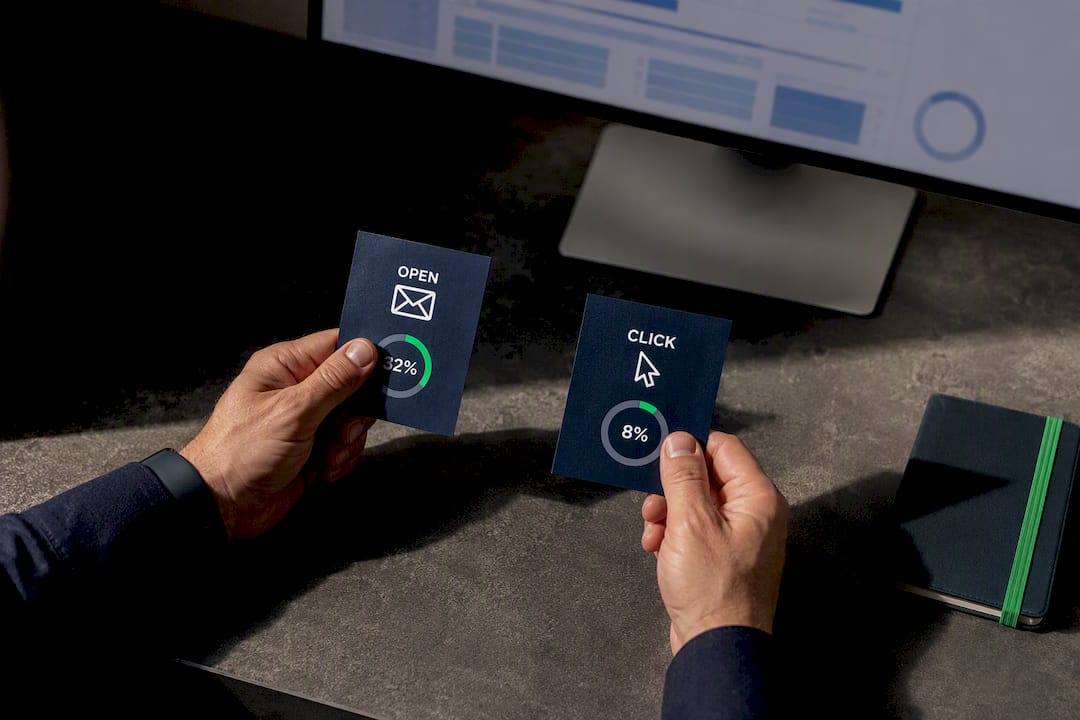
That number alone tells you almost nothing about traffic quality, though. The metric that actually predicts whether you'll make money is unique clicks and opt-in rate, not the open percentage sitting in your autoresponder's dashboard. Before you commit real budget to any vendor, run a 100-click micro-send and check that number against your niche's baseline.
TL;DR:
- A micro-send of 100 to 200 clicks provides sufficient data to verify a vendor’s traffic quality, including unique clicks and opt-in rates.
- Reported open rates are often inflated by Apple Mail privacy features and automation, so they should be discounted by 10 to 25 percentage points in analysis.
- Credible vendors usually deliver at least 90% unique clicks of total clicks, indicating authentic, non-recycled traffic.
- Opt-in rates are more reliable indicators of traffic quality, with warm niches averaging 30% to 45% and cold niches 10% to 25%.
- A vendor’s refusal to allow tracking or micro-sends signals red flags that warrant caution before scaling spend.
Table of Contents
- Open Rate Benchmarks for Solo Ads and What Drives Them
- Why Reported Solo Ad Open Rates Are Often Inflated
- Which Metrics Actually Predict Solo Ad Quality
- How to Run a 100-Click Micro-Send Before You Scale Spend
- Subject Lines: The Real Lever Behind Solo Ad Opens
- What SoloAdsGuide.com's Vetting Framework Catches Before You Pay
- The Buyer-First Take on Open Rate Hype
- Get the Vendor Vetting Checklist Before Your Next Solo Ad Buy
- Sources
- FAQ
Open Rate Benchmarks for Solo Ads and What Drives Them
A good email open rate across promotional campaigns generally runs 20% to 30%, and solo ads track close to that baseline once you strip out the noise.
Open rate on its own is a weak predictor of profit. Opt-in rate tells you far more about whether the traffic converts into leads you can actually monetize. Opt-in benchmarks vary sharply by niche:
- Warm niches (make-money-online, health, dating): 30% to 45% opt-in rate is a reasonable target, according to aggregated solo-ad test data.
- Cold or complex niches (SaaS, B2B tools, niche software): 10% to 25% opt-in is more realistic, since the offer requires more explanation and trust before someone hands over an email.
- Cost-per-lead expectations should scale with those opt-in numbers. A vendor charging premium click prices but delivering opt-ins at the bottom of their niche's range is a signal to dig deeper, not scale up.
- Earnings-per-click (EPC) rules of thumb only make sense once you've confirmed the opt-in rate holds up across a real sample, not a cherry-picked 20 clicks.
Use these ranges as a sanity check, not gospel. If a vendor reports open rates far above what's typical for their niche and list size, the next question isn't "how did they do it?" It's "can they prove it?"
Why Reported Solo Ad Open Rates Are Often Inflated
Apple Mail Privacy Protection (MPP) preloads tracking pixels the moment an email lands in an inbox, whether a person opens it or not. That single feature can inflate reported opens significantly for any list with a meaningful share of Apple Mail users, which describes most consumer lists in 2026.
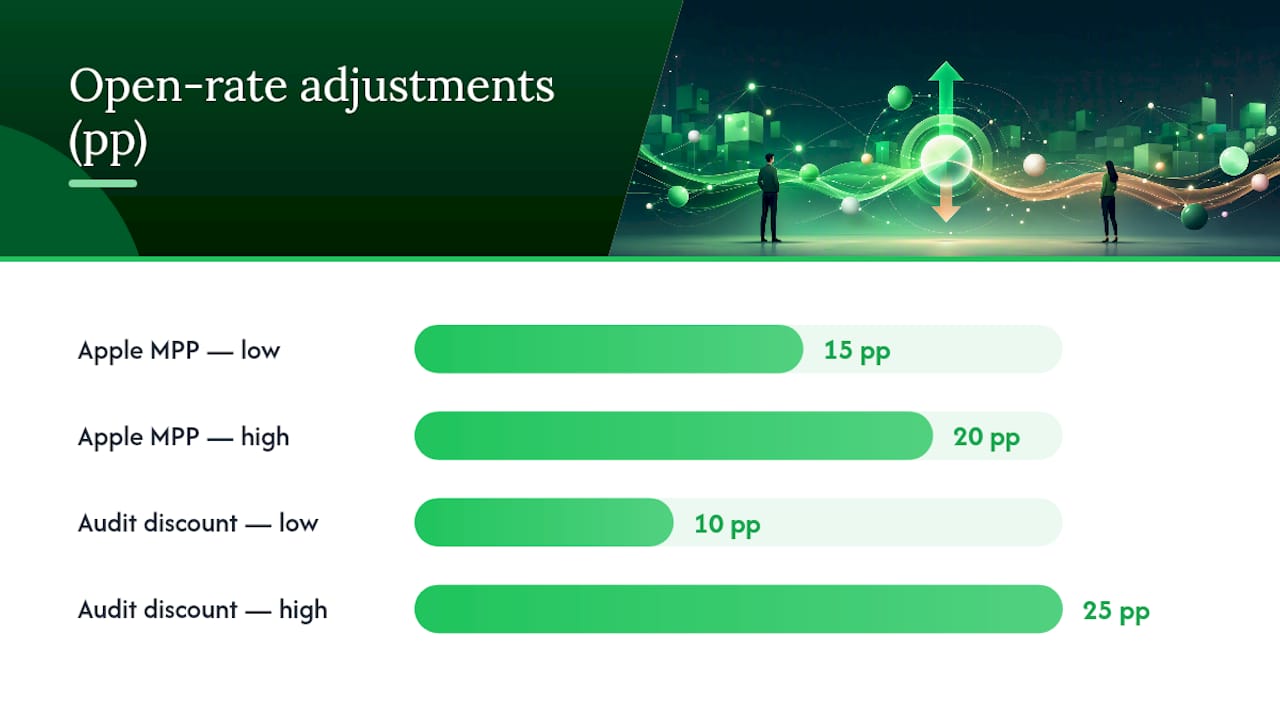
Statistic to know: Apple MPP and similar tracking discrepancies can inflate reported open rates by roughly 15 to 20 percentage points compared to genuine human opens, depending on how heavily the list skews toward Apple Mail users.
Bot traffic and automated test opens compound the problem. Some inbox providers run automated scans for malware or spam classification, and those scans register as opens even though no human ever saw the email. You'll also see this with privacy tools and relay services that mask real user behavior; browser and email privacy protections can make legitimate traffic resemble bot activity, which cuts both ways when you're trying to judge whether a spike is real.
The practical fix: mentally discount reported opens by 10 to 25 percentage points when you suspect a high Apple Mail share, and treat any open rate that seems unusually high relative to clicks as a red flag requiring an audit, not a celebration.
Which Metrics Actually Predict Solo Ad Quality
Open rate answers one question: did the email get past the inbox and register a pixel fire. It says nothing about whether a human read it, clicked it, or bought anything. Here's the hierarchy that actually matters, in order of how much weight each deserves:
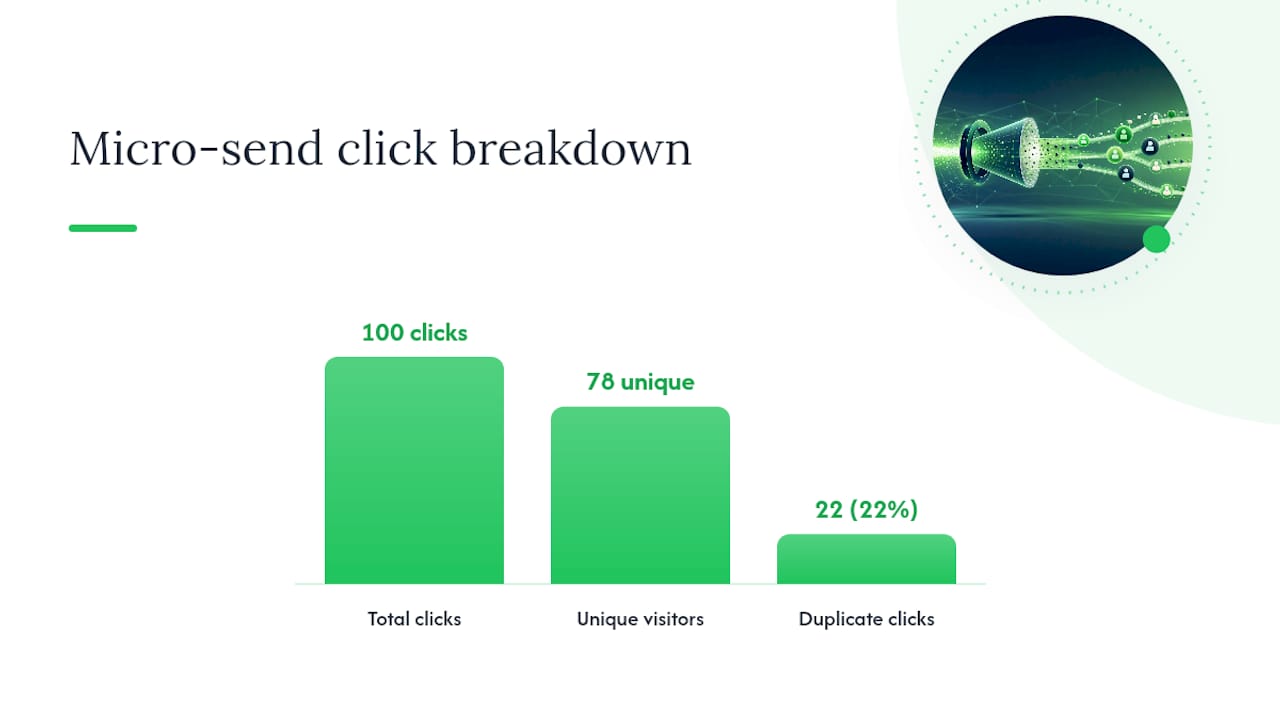
- Unique click percentage. This is the single most important quality signal in solo ads. A credible vendor should deliver unique clicks at 90% or higher of total clicks. Anything meaningfully below that suggests repeat clicks from the same sources, possibly bots or recycled traffic.
- Click-through rate (CTR). For a promotional send, a baseline CTR of 2% to 3% is typical. Lower than that on a "premium" list is a mismatch worth questioning.
- Click-to-open rate (CTOR). This measures clicks as a percentage of opens, isolating how compelling your offer was to people who actually opened the email. A low CTOR paired with a high open rate often points to inflated opens rather than a weak offer.
- Opt-in rate. Compare against your niche's baseline (30% to 45% warm, 10% to 25% cold) to judge whether the traffic converts once it hits your squeeze page.
- Reply rate. Less common as a primary metric, but a useful secondary signal for list engagement on relationship-driven offers.
No single metric tells the whole story. What matters is whether open rate, click rate, and opt-in rate move together in the same direction across multiple sends. A vendor whose opens stay flat while clicks and opt-ins climb is doing something right. One whose opens spike while everything else stagnates is worth walking away from, according to KPI guidance on email metrics.
How to Run a 100-Click Micro-Send Before You Scale Spend
You don't need to buy 1,000 clicks to find out if a vendor is legitimate. A small, controlled test tells you almost everything you need to know, and it costs a fraction of what a full campaign would.
- Buy a 100 to 200-click micro-send from the vendor, using your standard landing page and a single subject line so you're not introducing variables.
- Set up unique UTM parameters for the send so every click is attributable to that specific vendor and date, not blended with other traffic sources.
- Track unique clicks separately from total clicks. If your tracker shows 100 total clicks but only 78 unique visitors, that gap needs an explanation.
- Watch the time distribution of clicks. Traffic that arrives in a tight, unnatural burst (dozens of clicks in a two-minute window) often signals automated or recycled traffic rather than real subscribers opening an email over several hours.
- Measure opt-in rate on the exact same page you'd use for a full send, then compare it against your niche's baseline.
- Track downstream conversion across a full window, not just the first day. Check attribution at D0, D7, D14, and D30 to see whether leads actually convert over time or disappear after the initial opt-in.
If a vendor refuses to allow a micro-send before a bigger order, that refusal is itself a red flag.
Pro Tip: Run your micro-send test on a Tuesday or Wednesday send. Weekend and Monday sends often show different engagement patterns that can skew your baseline comparison.
Subject Lines: The Real Lever Behind Solo Ad Opens
Subject line is the single biggest factor you control on a cold list. Nobody clicks an email they didn't open, and nobody opens one that doesn't earn curiosity in six to eight words. Short, curiosity-driven phrasing consistently outperforms anything that reads like a sales pitch, and formulas built around a specific practitioner playbook can shift opens by 20% to 40% on the same list.
- Keep subject lines short. Long lines get truncated on mobile and lose their hook before the reader finishes reading.
- Avoid naming your product or making an income promise in the subject line. Both tend to trigger spam filters and inbox fatigue on lists that have seen the same tired formulas for years.
- Run three subject-line variants, each on its own 100-click micro-send, and judge the winner by click-through and downstream opt-in, not raw opens.
- Watch for list fatigue: a subject line that worked six months ago on the same vendor's list may underperform simply because the audience has seen too many similar hooks.
What SoloAdsGuide.com's Vetting Framework Catches Before You Pay
The 21-Question Vendor Vetting Framework on Soloadsguide exists because most vendor claims can't survive contact with actual tracking data. A handful of questions do the heavy lifting:
- Ask for tracking logs from a recent, comparable send, not a cherry-picked screenshot.
- Insist on unique-click verification before committing to a full-size order.
- Require a micro-send as a condition of the relationship, not a favor.
- Ask directly about refund or retest policy if the traffic underperforms your niche baseline.
The most common red flags: vendors who won't allow tracking on their end, opens that run high while clicks stay flat, and unique-click counts that shift depending on who's reporting them. If you hit any of these, run the 100 to 200-click verification test, document what you find, and don't scale until the numbers hold up on their own.
The Buyer-First Take on Open Rate Hype
Open rate gets treated as a headline number because it's the easiest one for a vendor to inflate and the hardest for a buyer to check without tracking in place. It shouldn't be the number that decides your spend. The vetting framework exists precisely because vendor claims and verified traffic quality are two different things, and only one of them should determine your budget.
— Philip Coble
Get the Vendor Vetting Checklist Before Your Next Solo Ad Buy
This site is built for buyers who want proof before they spend, not promises after. Unlike sellers pitching their own traffic, the guidance stays focused on one thing: verifying what a vendor claims before your budget is on the line.
Start with the 21-Question Vendor Vetting Framework to structure your next vendor conversation, then work through the click tracking setup guide so your UTM parameters are ready before you buy a single click. If you're still deciding where opt-in benchmarks should land for your niche, the opt-in rate breakdown walks through realistic targets by category. Run the micro-send, check the numbers against the thresholds in this article, and only scale spend once the tracking backs up the claim.
Sources
- What Is a Good Email Open Rate? Benchmarks, Context, and the Metrics That Actually Matter
- Solo Ads Tested: The Truth About Email Blast Traffic In 2025 | ConvertMinded
- Private Relay & Chrome IP Protection vs Fraud Detection
FAQ
What Is a Good Open Rate for Solo Ads?
Treat any number above that range with caution and verify it against unique clicks before trusting it, since Apple Mail Privacy Protection can inflate reported opens well beyond what real humans actually saw.
Why Are My Solo Ad Open Rates Higher Than Expected?
Apple Mail Privacy Protection preloads tracking pixels automatically, registering an open whether or not a person actually reads the email. Bot scans and automated test traffic add to the inflation, which is why open rate alone can't confirm real engagement.
How Many Clicks Should I Buy to Test a Solo Ad Vendor?
A 100 to 200-click micro-send is enough to reveal unique-click percentage, opt-in rate, and click-timing patterns before you commit to a larger order. Soloadsguide's verification test guide walks through the exact setup.
What Unique Click Percentage Should I Expect From a Legitimate Vendor?
Credible vendors typically deliver unique clicks at 90% or higher of total clicks. A lower ratio suggests repeat clicks from the same sources, which often signals recycled or automated traffic.
Should I Judge a Solo Ad Vendor by Open Rate or Opt-In Rate?
Opt-in rate matters more than open rate because it measures whether traffic actually converts into leads.
Recommended
- Solo Ad Buyers: 50–200 Click Test and 21 Questions to Verify Leads
- Solo Ads Opt-In Rate: Benchmarks and Tips for 2026
- Protect Your Budget: 21 Question Solo Ad Red Flags for Buyers
Want Verified Traffic Without the Guesswork?
PulseTraffic screens every seller, filters bot clicks in real time, and shows you verified buyer traffic labels before you spend a dollar.