

Yes, fake conversions are a real and ongoing problem in solo ads, and they cost buyers real money every week. If your opt-ins look strong but sales stay flat, don't assume your offer is broken. First, turn on an independent click tracker separate from the seller's dashboard. Second, run a small 100 to 200 click test before scaling. Third, check email opens and replies, not just opt-in counts, and judge everything against one number: sales or leads per 100 clicks.
TL;DR:
- Running a small test of 100 to 200 clicks with independent tracking helps identify fake traffic patterns such as rapid bursts, repeated IPs, or uniform device usage.
- Vendors often provide vague or incomplete list information, enabling fraud; demanding raw, timestamped click logs is essential for verification.
- A significant discrepancy between your tracker and the seller’s reported clicks indicates inflated metrics and potential bot or recycled list traffic.
- Genuine buyers cross-check for engagement metrics like email opens and replies, which are more reliable indicators than opt-in numbers alone.
- Solo ads are most effective when you have a proven funnel and carefully vet vendors with clear list sourcing, recent logs, and transparent refund policies.
Table of Contents
- What Fake Conversions and Invalid Traffic Look Like in Solo Ad Campaigns
- How to Detect Fake Solo Ad Traffic: Metrics, Logs, and Tools
- Vendor Vetting Checklist: The Questions That Separate Real Sellers From Risks
- How to Run a Safe Test Buy Before Scaling a Solo Ad Order
- Funnel and Follow-Up Fixes That Turn Cold Clicks Into Buyers
- Common Scam Patterns Buyers Actually Run Into
- Legal and Ethical Ground Rules When You Suspect Fake Traffic
- When Solo Ads Are Worth Testing and When to Walk Away
- Get the Vetting Tools Before You Spend Another Dollar on Traffic
- Sources
- FAQ
What Fake Conversions and Invalid Traffic Look Like in Solo Ad Campaigns
Fake conversions in solo ads take a few predictable forms, and each one leaves a different fingerprint. Bot or automated clicks hit your link in rapid bursts, often from a script that never actually reads your email. Incentivized clicks come from people paid pennies to click links regardless of interest, so they opt in and vanish. Recycled or resold lists get sold to buyer after buyer, producing opt-ins from addresses that have already seen a hundred pitches this month. Link-scanner or preview traffic comes from email security software automatically opening every link in an inbox, which inflates click counts without a human ever seeing your page. And plain accidental duplicates, someone double-clicking a slow-loading page, can pad your numbers without any bad intent at all.
Not every disappointing campaign is fraud, though. Ad fatigue and list saturation are common, boring explanations for weak results, especially when a vendor's list has been mailed hard for months. A tired list behaves a lot like a fake one: low engagement, high unsubscribes, quiet inboxes. The difference matters because one problem means you switch vendors, and the other means you switch offers or sequences.
Certain seller pitches should put you on alert before you spend a dollar:
- Guaranteed sales or guaranteed conversion rates on cold traffic
- Opt-in rates well above what your niche typically sees
- Vague or shifting answers about where the list actually came from
- Refusal to share any sample logs "for privacy reasons"
- Pressure to buy in bulk before you've tested a small batch
How to Detect Fake Solo Ad Traffic: Metrics, Logs, and Tools
Detecting fake traffic is a data problem, not a gut-feeling problem. You need your own numbers sitting next to the seller's numbers, and you need to know exactly what to compare.
Collect these metrics on every run, independent of what the vendor reports:
- Unique clicks versus total clicks (a huge gap suggests reloads or bots)
- IP address frequency, since the same address hitting your link dozens of times is not organic
- Timestamp distribution across the delivery window, not just a raw click total
- Session length on your landing page
- Device and browser mix, since an unnaturally uniform mix often signals scripted traffic
- Geography, checked against where the vendor claims the list is based
- Email opens and reply rates after your first few follow-up messages
Invalid or automated traffic tends to show up as hundreds of clicks arriving almost simultaneously, repeated IP addresses, short sessions, and near-identical browsing patterns, a pattern real human traffic almost never produces. Real buyers click at scattered times across hours, not in ten-second bursts.
The comparison that matters most is your own click tracker against the seller's self-reported numbers. Tools like ClickMagick or Voluum let you tag every link with a unique parameter, log the raw click data on your own server, and generate a report the vendor can't edit. If the seller claims 200 clicks delivered and your tracker shows 130 unique visitors, that gap is your evidence, not a guess. A dedicated guide to IP filtering walks through how to flag repeat offenders at the server level before they ever reach your funnel.
Pro Tip: Pull a 48-hour sample of raw click timestamps with IP fragments and device types before you commit to a full order. If the same IP shows up five times in an hour, you already have your answer.
Vendor Vetting Checklist: The Questions That Separate Real Sellers From Risks
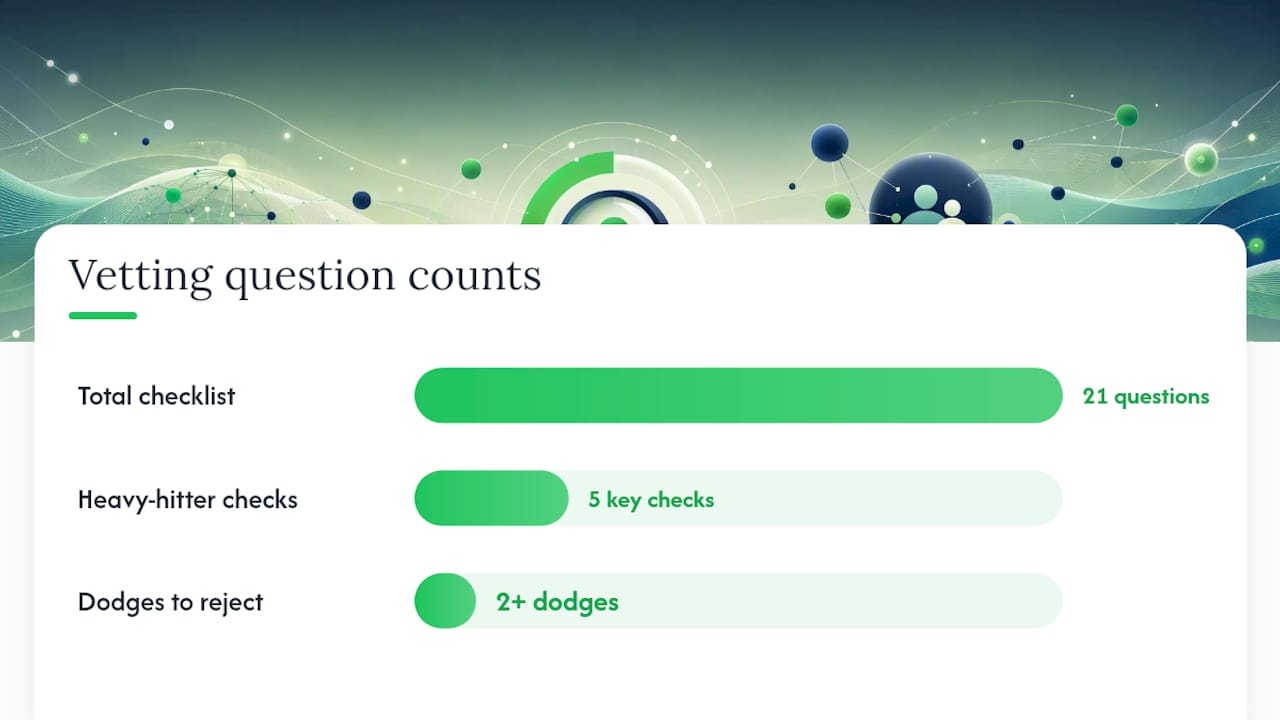
A full vendor vetting process runs through 21 questions, but five of them do most of the heavy lifting when you're deciding whether to even request a test:
- Where does your list actually come from, and how was it built (opt-in source, niche, age)?
- How fresh is the list, and how often is it mailed to other buyers in a given week?
- Can you provide a raw click log sample, with timestamps and IP fragments, from a recent campaign?
- What's your refund or make-good policy if independent tracking shows a shortfall?
- Who bought from you recently, and can you point to a testimonial you didn't write yourself?
What counts as real proof is narrower than most buyers assume. Raw, UTM-tagged click logs beat a screenshot of a dashboard every time, because a dashboard is the seller's own summary of their own numbers. An IP and timestamp sample lets you cross-check for repetition before you spend anything. A comparison against your own independent tracker is the only evidence a vendor can't fabricate after the fact. And a testimonial that lives on a public forum or a third-party review thread, rather than one pasted onto the seller's sales page, carries more weight because it wasn't written to close a sale. The site's own breakdown of vetted vendor testimonials shows what that kind of proof actually looks like next to the fabricated kind.
Use the answers to make one decision: test small, or walk away. A vendor who answers all five clearly and offers a recent log sample earns a small test buy. A vendor who dodges two or more of these, especially the refund policy or the log request, isn't worth the risk regardless of price. The full 21-question framework covers the remaining questions for buyers who want the complete checklist before their first purchase.
Pro Tip: Ask for the log sample before you mention budget. Vendors who stall once money is off the table are telling you something.
How to Run a Safe Test Buy Before Scaling a Solo Ad Order
A test buy only works if it's set up correctly before the first click arrives. Skipping the setup is how buyers end up arguing with a vendor over numbers neither side can actually verify.
- Prepare your tracking first. Install an independent click tracker, tag every link with a UTM parameter, and confirm it's logging clicks in real time before you place the order.
- Get your landing page and email sequence ready. The page needs to load fast and match the lead magnet the vendor's audience expects; your welcome sequence needs to be live, not "coming soon."
- Set your success metric before you buy, not after. Sales per 100 clicks or cost per lead, picked in advance, keeps you from rationalizing a bad result later.
- Order the minimum test quantity, typically 100 to 200 clicks, never a full-size run on an unvetted vendor.
- Pull your own log and the seller's report side by side once delivery finishes, then check opens, replies, and any sales inside a defined window, usually 48 to 72 hours.
- Apply your decision rule. If your tracker and the seller's numbers land within a reasonable range and you get real opens and replies, scale cautiously. If clicks don't match or engagement is near zero, stop and request an explanation before ordering again.
A structured 100 to 200 click test gives you enough data to judge a vendor honestly without risking a full budget on an unknown.
Funnel and Follow-Up Fixes That Turn Cold Clicks Into Buyers
Traffic quality only tells half the story. A perfectly clean click from a real, interested subscriber still won't convert if your funnel isn't ready to receive it.
Cold solo ad traffic needs a landing page built for strangers, not for warm leads. That means:
- One call to action per page, never three competing offers
- Load time under two or three seconds, since solo ad clicks rarely wait
- A lead magnet that matches exactly what the ad promised, not a loosely related upsell
Your welcome sequence carries the real weight of converting a cold click into a customer. A five-email sequence over the first week, delivering value first, addressing a common objection, sharing a quick win, introducing your paid offer, and following up once more, tends to outperform a single hard-sell email sent right after opt-in. High opt-in rates can be misleading if those addresses never open a single follow-up email, which is exactly why opens and replies matter more than the opt-in number itself.
To separate a traffic problem from a funnel problem, A/B test one variable at a time, swap your lead magnet against your current opt-in rate, or test a different subject line against your current open rate. If a new vendor's traffic produces the same weak numbers your last funnel version produced, the funnel is the bottleneck, not the seller.
Pro Tip: Run your funnel changes against a vendor you already trust before blaming a new one. Isolate one variable at a time.
Common Scam Patterns Buyers Actually Run Into
Three patterns show up again and again across solo ad complaints, and each has a specific way to expose it.
Padded clicks via automated scripts show up in your logs as dozens of clicks landing within seconds of each other, often from a narrow band of IP addresses. Ask the vendor directly for their raw delivery log from that exact send. A legitimate seller can produce it in minutes; a script-padded one stalls or refuses.
Recycled lists producing opt-ins but zero opens look great on the surface, decent opt-in numbers, then dead silence for 72 hours. Request the list's average open rate from its last three campaigns before you buy again, and compare it against your own post-purchase open data.
Incentivized or click-farmed traffic clusters at odd hours with a suspiciously uniform device mix, all mobile, all one browser version. Cross-reference timestamps against your tracker's device report; a real list clicks from a spread of devices at scattered times, not a single pattern repeated hundreds of times.
Legal and Ethical Ground Rules When You Suspect Fake Traffic
If your own logs show a real discrepancy between what a vendor promised and what you received, you have standing to request a refund or credit, and most reputable sellers have a policy for exactly this. Document everything before you raise the issue: raw click logs, timestamps, IP samples, and your tracker's summary report. A vendor who won't discuss a documented shortfall is telling you how the rest of the relationship will go.
There's a real difference between disputing a bad batch of traffic and making a public accusation you can't back up. Naming a vendor as fraudulent in a public forum without solid logs exposes you to a dispute of your own, and it damages your credibility with other sellers even when your complaint is legitimate. Keep the conversation private and evidence-based first; escalate publicly only if a vendor refuses to engage after you've shown documented proof.
Google Ads support threads that document fake lead submissions consistently point to the same fix regardless of platform: compare your own conversion logs and timestamps against what the platform or seller reports, rather than accepting either side's summary at face value. That habit, treat every claimed conversion as unproven until your own data confirms it, applies just as directly to solo ads as it does to paid search. It's not about assuming bad faith from every vendor. It's about refusing to be the only party in the transaction without a paper trail.
When Solo Ads Are Worth Testing and When to Walk Away
Solo ads tend to work for operators who already have a proven funnel and just need more eyes on it. They tend to fail for buyers testing an unproven offer in a niche the vendor's list doesn't actually serve, no amount of clean traffic fixes a mismatch like that.
Treat your first few buys as paid education, not a revenue bet. Track everything: which vendor, which list, what your tracker showed versus what they reported, what converted and what didn't. That record becomes more valuable than any single campaign's result, because it tells you which vendors are worth repeating and which claims to ignore next time.
Vetting first isn't caution for its own sake. It's the only way a small test buy actually tells you something useful.
— Philip Coble
Get the Vetting Tools Before You Spend Another Dollar on Traffic
This resource was built around one idea: verify before you scale, every time, no exceptions. The 21-question vendor vetting checklist walks through exactly the questions covered above, plus the follow-up questions that separate a stalling vendor from a straight one.

Beyond the checklist, the site's test-buy templates give you a ready-made structure for running your 100 to 200 click test, including what to log, how to format your comparison against the seller's report, and what counts as a pass or fail. If you'd rather fix your funnel than chase more traffic, a content agency can help rebuild a landing page or follow-up sequence that's underperforming regardless of traffic source. Head to the Soloadsguide vendor vetting checklist to download the framework, run your first tracked test this week, and come back with real numbers instead of a vendor's dashboard screenshot.
Sources
For deeper reading, see Market Spur's breakdown of solo ad risks and returns and the Google Ads thread on fake lead detection. Pair either with a click tracker, an email verification tool, and a server log analyzer to check any seller's claims against your own numbers.
- Are Solo Ads Worth It for Affiliate Marketers in 2026? Costs, Risks and Realistic Returns - Market Spur
- Are solo ads worth it: risks, returns, and a verdict - CLIMB
- Funnel
- Getting Fake Leads from Different Conversion Actions - Google Ads Help
FAQ
Can you give me some examples of fake ad traffic?
Bot clicks arriving in rapid bursts, incentivized clicks from paid-to-click users, recycled email lists with high opt-ins but no opens, and automated link-scanner previews from email security software are the most common examples.
Are solo ads worth it for affiliate marketers?
Solo ads can be worth it if you already have a tested funnel and vet vendors carefully with independent tracking. They're rarely worth it for buyers testing an unproven offer against an unverified list.
Is copying someone else's ad illegal?
Copying another advertiser's exact ad copy or creative can raise copyright issues, and using their trademarked name or brand claims can create legal exposure. Writing your own copy based on general messaging angles, without lifting exact wording, avoids most of that risk.
How much do solo ads cost?
Solo ad clicks typically run about $0.30 to $0.90 each, usually sold in packages of 100 to 500 clicks. Prices well below that range are often a sign of low-quality or fraudulent traffic rather than a bargain.
Recommended
- Fake Proof Solo Ads: How to Verify Before You Buy
- Protect Your Budget: 21 Question Solo Ad Red Flags for Buyers
- How to Verify Vendor Testimonials for Solo Ad Buyers
- Questions Before Buying Solo Ads: 2026 Buyer's Guide
Want Verified Traffic Without the Guesswork?
PulseTraffic screens every seller, filters bot clicks in real time, and shows you verified buyer traffic labels before you spend a dollar.